
Masseter Botox softens the jaw muscle so the lower face gradually looks narrower and less square. It is one of the most requested non-surgical ways to change the shape of the lower face, and it works on muscle bulk rather than on skin or fat. Because the masseter is a strong chewing muscle that can grow with years of clenching, relaxing it partially lets it slim down over a few weeks. Here is what the treatment actually involves, what it costs, how long it lasts, and where the honest limits are.
The essentials
- Masseter Botox relaxes the chewing muscle at the back of the jaw so it loses some bulk over time, which narrows the lower face.
- Change is gradual. Most patients notice softening over several weeks rather than within days, and results vary from person to person.
- Unit amounts are decided by your provider after examining how strong your masseter is. There is no single correct dose.
- In the United States, BOTOX Cosmetic is FDA approved for three upper face areas. Treating the masseter is an off-label use, which is common in aesthetic practice and something your provider should explain before you consent.
- It is a consultation first. We assess your jaw, your clenching habits and your goals before anyone talks about units.
What is masseter Botox?
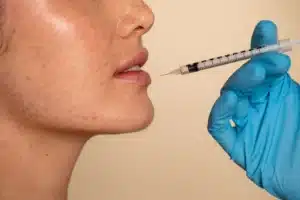
Masseter Botox is an injection of botulinum toxin type A into the masseter, the thick muscle you can feel at the back of your jaw when you bite down. The injection partially reduces how forcefully that muscle contracts. With less work to do, the muscle slowly loses volume, and the jawline reads softer and more tapered.
The masseter is one of the strongest muscles in the body relative to its size, and it responds to use like any other muscle. People who clench or grind, chew a lot of firm food, or simply inherited a heavier jaw structure often have a visibly wide lower face. Botulinum toxin does not shave bone and it does not remove fat. It changes muscle bulk, which is why it only helps when muscle is the reason the jaw looks wide. If the width comes from bone structure or from fullness in the cheeks, a different plan makes more sense, and a good provider will say so.
The same product used for frown lines is used here, just placed in a different muscle. You can read more about how we approach Botox at Esthetica Medspa across our locations.
How does masseter Botox slim the jawline?
Botulinum toxin blocks the signal between nerve and muscle, so the treated muscle contracts less strongly. Over the following weeks, a muscle that is working less tends to reduce in size, much as any muscle does when it stops being trained. That reduction is what changes the outline of the jaw.
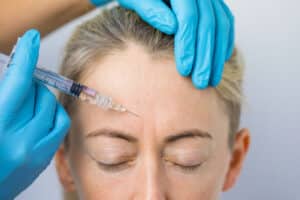
This is why the timeline feels different from a forehead treatment. When you treat frown lines, the skin smooths as soon as the muscle relaxes, and the manufacturer reports that patients may start to see results in one to two days with full results at 30 days for the approved facial areas (BOTOX Cosmetic). With the masseter, the visible change depends on the muscle physically reducing in volume, which takes longer. Many patients describe the first noticeable difference somewhere around weeks four to eight, with the shape continuing to settle after that. Results vary, and someone with a very strong masseter may need more than one treatment cycle before the contour changes in a way they are happy with.
How many units of masseter Botox do you need?
There is no fixed number, and any source that gives you one without examining your jaw is guessing. Your provider palpates the muscle while you clench, judges its strength and thickness on each side, and chooses a dose from there. Asymmetry is common, so the two sides are not always treated with the same amount.
It helps to see how the masseter compares with the areas that do have an approved, published dose. The three cosmetic areas below are FDA approved and the manufacturer states the approved amounts.
| Area | Regulatory status in the US | Published amount |
|---|---|---|
| Frown lines (glabellar) | FDA approved for BOTOX Cosmetic | 20 units |
| Forehead lines | FDA approved for BOTOX Cosmetic | 20 units |
| Crow’s feet lines | FDA approved for BOTOX Cosmetic | 24 units, 12 per side |
| Masseter (jaw slimming) | Off-label aesthetic use | No approved dose. Decided per patient by the provider |
Approved areas and amounts per BOTOX Cosmetic, accessed September 2026. The masseter row reflects its off-label status, not a recommendation.
In our own practice, masseter treatments use noticeably more product per side than an upper face area, which is the main reason the price sits higher. If you want the full picture of how dosing works elsewhere on the face, we break it down in our guide to Botox units by treatment area.
How much does masseter Botox cost?
Masseter treatment is priced per unit at most practices, including ours, so the total depends on how much product your muscle needs. Because the masseter takes more units than a forehead or a frown line treatment, it usually lands at the higher end of a Botox price list. Two people can walk out of the same appointment with very different totals, and that is normal rather than a sign that something went wrong.
A few things move the number: how strong and thick your masseter is, whether both sides need the same amount, whether you are treating the jaw alone or combining it with other areas in the same visit, and the pricing structure of the practice. We quote the total at consultation, before anything is injected, so there are no surprises. Our current per-unit pricing and the way it adds up by area is set out in our guide to what Botox costs in 2026.
One thing worth saying plainly: this is not a one-time purchase. The effect wears off, so if you like the result you should plan for repeat treatments. Ask about that at the consultation rather than after the first session.
How long does masseter Botox last?
For the approved cosmetic areas, the manufacturer reports a duration of effect of roughly three to four months for frown lines (BOTOX Cosmetic). In the masseter, many patients report that the slimming effect holds a little longer than that, partly because the visible result depends on muscle volume rather than on the immediate relaxation, and volume takes time to come back.
What we tell patients is to expect a first cycle, then a review. Some people find the shape holds well enough that they space treatments further apart after the first year or two, because a muscle that has been treated repeatedly is not being trained back to its previous bulk in between. Others prefer to keep to a regular schedule. Neither is wrong, and results vary enough that the honest answer is that we plan it with you rather than promise a fixed interval.
The care after treatment is the same as for any botulinum toxin session, and it is simple. Our Botox aftercare guide covers the first 24 hours and the days that follow.
Who is a good candidate for masseter Botox?
The best candidates are adults in good general health whose lower face looks wide because of masseter bulk, who understand that the change is gradual, and who are comfortable with maintenance. If you clench your jaw, wake with a tight jaw, or have noticed your face looking squarer over the years while your weight has stayed stable, muscle is a plausible explanation and it is worth an assessment.
It is not right for everyone. Botulinum toxin is not used during pregnancy or breastfeeding. People with certain neuromuscular conditions, or with an allergy to any component of the product, should not be treated. If you have an active infection at the injection site, treatment waits. And if the width of your lower face comes mainly from bone or from soft tissue rather than muscle, this treatment will not deliver what you are picturing, which is a conversation we would rather have at the consultation than afterwards.
There is also a category we take seriously: patients who come in describing jaw pain, headaches or a diagnosed joint problem. Clenching and grinding are part of why masseter treatment exists, but pain and joint disorders are medical issues, not aesthetic ones. We treat the jaw for contour and we will refer you to a dentist or physician for anything beyond that. We never present this as a treatment for a medical condition.
What are the downsides and side effects of masseter Botox?
This is the part most pages skip, and it is the part worth reading. Botulinum toxin is well characterized and the professional bodies publish clear patient information about its risks, including the American Society for Dermatologic Surgery and the American Society of Plastic Surgeons. General injection effects include temporary redness, swelling, tenderness or bruising at the site.
Effects that are specific to this area are worth knowing before you book. Some patients report a feeling of chewing fatigue in the first weeks, particularly with tough or chewy food, which typically settles as they adapt. If the product is placed too superficially or spreads beyond the intended muscle, a temporary change in the smile can occur, which is one reason placement and depth matter and why you want an experienced injector who treats this area regularly. Over-reduction is also possible, and in some patients an excessively hollowed lower face is not the look they wanted. Very rarely, spread of toxin effects beyond the treatment site can cause more serious symptoms such as difficulty swallowing or breathing, and the professional sources above describe these warnings in full.
The practical downsides are less dramatic but real. It is slow, it is not permanent, it needs maintenance, and it will not change bone. Going in with that understanding is what separates patients who are pleased at six months from patients who are disappointed at week two.
What happens at your consultation?
We start by asking what bothers you and looking at your face at rest and while clenching, which is how we tell muscle bulk apart from bone and soft tissue. We review your health history, your medications and anything that would rule treatment out. If the masseter is the right target, we explain the off-label status, the realistic timeline, the dose we are proposing and the total cost before anything is injected. If it is not the right target, we say so and talk through what would actually help.
Our providers are licensed clinicians and every treatment plan is made in person. Online booking reserves a consultation, not a treatment. Book a consultation at the Esthetica Medspa location nearest you and we will take it from there.
Frequently asked questions
How long does masseter Botox last?
Many patients find the jaw slimming effect holds longer than the three to four months the manufacturer reports for frown lines, because the visible result depends on muscle volume returning rather than on the muscle simply reactivating. Results vary, and your provider will plan a review after the first cycle.
How much is 20 units of masseter Botox?
Masseter treatment is priced per unit, so 20 units costs 20 times the per-unit price at the practice you choose. Most masseter treatments use more than 20 units in total across both sides, so 20 units is rarely the full amount for this area. We quote your exact total at consultation.
What are the downsides of masseter Botox?
The main ones are that it is gradual, temporary and needs maintenance. Possible side effects include bruising, swelling, tenderness, temporary chewing fatigue, and less commonly a change in the smile if the product affects nearby muscles. Over-reduction can leave the lower face looking hollower than intended.
Is masseter Botox FDA approved?
BOTOX Cosmetic is FDA approved to temporarily improve frown lines, crow’s feet lines and forehead lines. Treating the masseter for jaw slimming is an off-label use. Off-label use is legal and common in medicine when a licensed provider judges it appropriate, and we explain it as part of consent before treatment.