
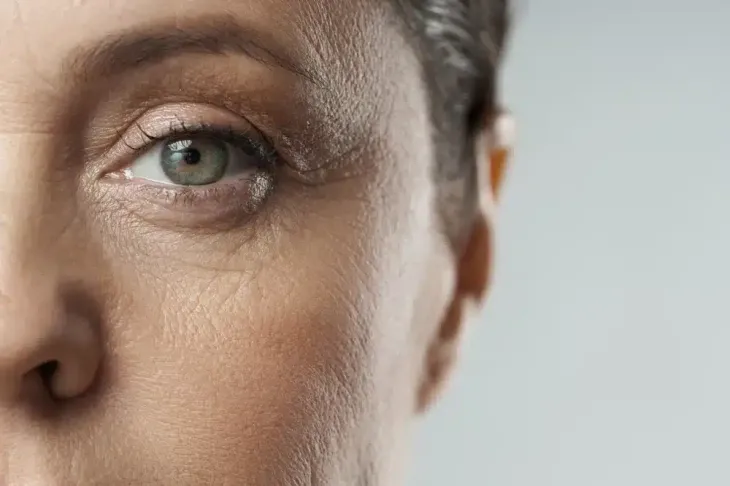
Crow’s feet Botox relaxes the muscle that crinkles the skin at the outer corner of the eye, and the FDA label sets the dose at 24 units, 12 per side. Most people search for it as crows feet botox; on the FDA label the area is called lateral canthal lines, and it has been an approved use of Botox Cosmetic since September 2013. The eye area is small, the muscle is thin and close to the skin, and that combination is why technique matters here more than in any other starter zone. Here is what the treatment does, the exact unit map, what it will not fix, and how to judge your result.
Updated October 5, 2026 by the Esthetica Medspa clinical team.
The essentials
- Botox Cosmetic has been FDA-approved for moderate to severe lateral canthal lines (crow’s feet) since September 11, 2013.
- The labeled dose is 24 units in total: 4 units at each of 3 injection points per side, so 12 units per side.
- It treats lines caused by muscle movement. It does not treat crepey skin, hollowing under the eye or dark circles.
- Onset is 3 to 7 days, the full effect lands around two weeks, and most people repeat at three to four months.
- Botox for crow’s feet is a named service at all seven Esthetica Medspa locations.
What are crow’s feet, and what causes them?
Crow’s feet are the fine lines that fan outward from the outer corner of the eye when you smile or squint. They are produced by the orbicularis oculi, the ring-shaped muscle that closes the eyelid. Each time it contracts, the thin skin at the corner of the eye folds, and over the years those folds become visible at rest as well as in motion.
The skin here is among the thinnest on the body, which is why crow’s feet often appear earlier than forehead lines, and why sun exposure and smoking accelerate them so visibly. On the FDA label this region is named “lateral canthal lines,” so if you see that phrase in a provider’s paperwork, it is the same thing.
Is Botox FDA-approved for crow’s feet?
Yes. The FDA approved Botox Cosmetic for the temporary improvement in the appearance of moderate to severe lateral canthal lines on September 11, 2013. It was the second cosmetic indication for the product, after glabellar lines in 2002 and before forehead lines in 2017 and platysma bands in 2024.
Source: Botox Cosmetic FDA approval history, read October 5, 2026. The approval covers Botox Cosmetic specifically; other neuromodulators carry their own indications, which is worth checking if a provider offers an alternative product. Our comparison of Letybo and Botox explains how the newer options differ.
How many units of Botox for crow’s feet?
The labeled total is 24 units, split evenly between the two sides. Each side receives 4 units at each of three points, placed in a vertical arc lateral to the eye, which comes to 12 units per side.
| Zone | Units per point | Points per side | Per side | Total |
|---|---|---|---|---|
| Lateral canthal lines (crow’s feet) | 4 units | 3 | 12 units | 24 units |
| Glabellar lines, for comparison | 4 units | 5 points total | n/a | 20 units |
| Forehead lines with glabella, for comparison | 4 units | 5 plus 5 | n/a | 40 units |
Source: Botox Cosmetic dosage guide, reflecting FDA prescribing information, read October 5, 2026.
In practice, doses here are often started at or below the labeled amount, because the eye area shows overtreatment faster than anywhere else. Placement is also deliberately kept away from the lower eyelid and from the muscle that lifts the upper lip. Our guide to Botox units by area sets the eye zone against every other treatment area.
Can crow’s feet Botox be combined with other areas?
Yes, and it commonly is. Crow’s feet, frown lines and forehead lines are frequently treated in one visit because the muscles interact: relaxing the brow area changes how the eye area moves, and treating all three gives a more even result than treating one at a time.
Sequencing matters for a first visit, though. If you have never had a neuromodulator, treating one or two areas and reviewing at two weeks tells your injector how your muscles respond before a larger plan is built. Neuromodulators now account for about 50% of all minimally invasive cosmetic procedures in the United States, according to the ASPS 2025 statistics report, so most injectors see this area constantly. Ask yours how often, and ask to see the plan before the needle comes out. Our guidance on how to find a qualified medspa injector covers the questions worth asking.
What will crow’s feet Botox not fix?
It will not fix crepey texture, hollowing or dark circles, because none of those are caused by muscle movement. This is the most common mismatch we see in consultations: someone books Botox for the eye area and the thing bothering them is actually volume loss or skin quality.
A short triage helps. If the lines deepen dramatically when you smile and soften at rest, a neuromodulator is the right tool. If the area looks tired and shadowed whether or not you are smiling, the conversation is about under-eye filler and tear troughs, resurfacing, or both. Treating the wrong cause is how people end up disappointed with a technically well-done injection.
| What bothers you | Likely cause | Usual first option |
|---|---|---|
| Fan of lines when you smile | Orbicularis oculi movement | Botox, 24 units labeled |
| Fine crepey texture at rest | Skin thinning and sun damage | Resurfacing or collagen stimulation |
| Shadow or hollow below the eye | Volume loss at the tear trough | Assessment for filler, if suitable |
| Puffiness or loose lid skin | Fat position or skin laxity | Surgical or device assessment, not a neuromodulator |
What happens during the appointment?
Expect a short visit. Your injector will ask you to smile and squint so they can see where the lines form and how far they extend, then place three small injections per side with a very fine needle. No anesthesia is usually needed, and topical numbing is available if you want it.
Bruising is slightly more likely here than on the forehead, because the skin is thin and the area is well supplied with small vessels. Small bruises are easy to cover and typically clear in under a week. Aftercare is the standard protocol: upright for about four hours, no strenuous exercise, saunas or facials for 24 hours, and no rubbing the area. Our Botox aftercare guide walks through the first two days.
How long do crow’s feet results last, and what can go wrong?
Most people repeat at three to four months, the same as other facial areas, with shorter duration if the muscle is very strong or you are highly expressive. Our page on how long Botox lasts covers the factors that shorten it.
The side effects specific to this area come from product reaching muscles it was not meant to reach. Too far down and the smile can flatten on one side; too close to the lower lid and the lid can feel weak or the eye can look rounder. These are uncommon, temporary, and largely a function of placement, which is the argument for an injector who treats the periocular area routinely. Conservative first doses are the other safeguard.
One honest limitation: lines that are deeply etched at rest after years of squinting will soften rather than disappear. Several treatment cycles help, because the skin stops being folded repeatedly, but the baseline texture of thin, sun-exposed skin needs a different tool.
Where can you have crow’s feet Botox at Esthetica?
Botox for crow’s feet is listed as a named service at all seven of our locations, including Esthetica Medspa Louisville. Because we are a women-led group running the same protocols in all seven markets, the mapping approach and the dosing philosophy do not change depending on which of our clinics you walk into. You can review the treatment overview on our Botox service page, and your consultation will include a straight answer about whether your eye-area concern is a muscle problem at all.
Who should not have crow’s feet Botox?
This treatment is not suitable if you are pregnant or breastfeeding, have a neuromuscular disorder such as myasthenia gravis, have an active infection at the injection site, or have reacted to a botulinum toxin product before. Dry eye, previous eyelid surgery and a history of lower lid laxity all deserve a mention at the consultation, because they change how the eye area tolerates treatment.
There is also a judgement call about timing. If your lower lid already feels loose or your eyes water easily, relaxing the muscle that supports the lid can make both worse. In that situation we would rather discuss skin-quality treatments first than treat the muscle and create a new problem.
Is it worth starting crow’s feet Botox early?
Starting earlier, at lower doses, is a reasonable strategy for the eye area specifically, because the skin here is thin and lines etch in sooner than elsewhere. The logic is simple: it is easier to stop a line from setting than to soften one that has been folding for twenty years.
That does not mean everyone in their twenties needs it. It means that if you already see lines at rest in your early thirties, waiting does not make the eventual result better. Our article on preventative Botox and whether to start early sets out the arguments on both sides without overselling it.
Frequently asked questions
How many units of Botox for crow’s feet?
The FDA label specifies 24 units in total: 4 units at each of three points per side. Many injectors start at or below that for a first treatment in the eye area.
Will Botox for crow’s feet change my smile?
It should not. The injections are placed lateral to the eye and away from the muscles that lift the lip. If product spreads too far down, the smile can flatten temporarily, which is why placement and conservative dosing matter here.
Can Botox fix the crepey skin under my eyes?
No. Botox addresses lines caused by muscle movement. Crepey texture, hollowing and dark circles have different causes and need different treatments, which your injector should separate out at the consultation.
Does it hurt, and will I bruise?
Most people describe three quick pinches per side. Small bruises are a little more common here than on the forehead because the skin is thin, and they usually clear within a week.
How soon will I see results?
Softening typically starts at 3 to 7 days with the full effect at about two weeks. Judge the result at day 14, not day 3.
Is crow’s feet Botox worth it if my lines show at rest?
It still helps, but expect softening rather than erasure. Deeply etched lines usually improve over several cycles, and pairing treatment with resurfacing is often discussed for the remaining texture. Results vary.
Sources
- Botox Cosmetic FDA approval history, read October 5, 2026.
- Botox Cosmetic dosage guide, reflecting FDA prescribing information, read October 5, 2026.
- ASPS 2025 procedural statistics summary: neuromodulators represent 50% of all minimally invasive procedures.
This article is general information, not medical advice. Treatment suitability is assessed in person by a licensed provider. Individual results vary.


