
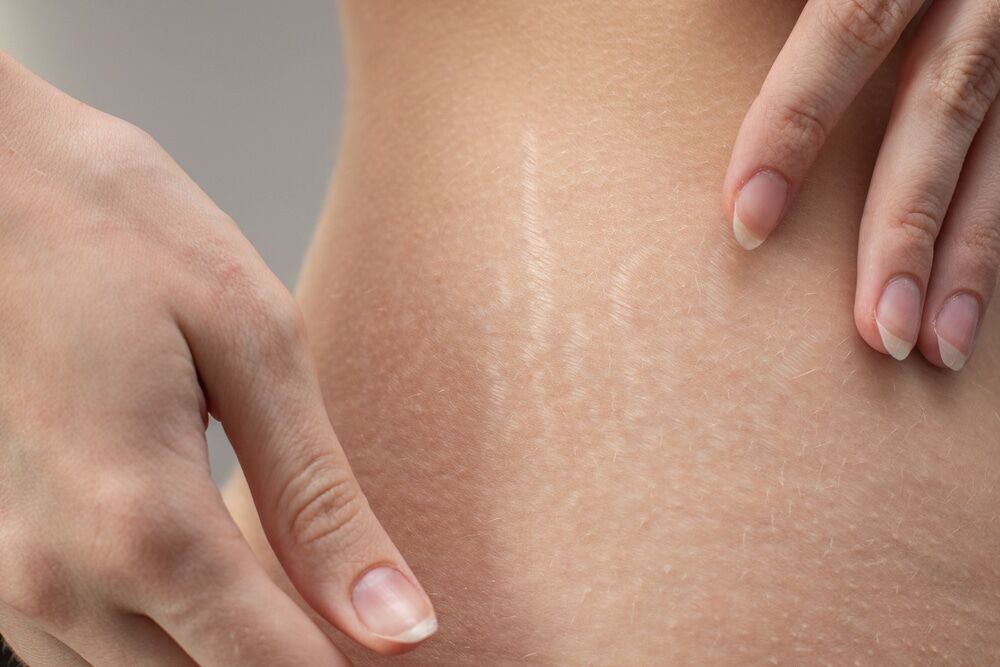
The most effective stretch marks treatment options are laser therapy, microneedling, and prescription retinoids, and they work best when started early while the marks are still red. No treatment erases stretch marks completely, but the right stretch marks treatment can make them noticeably less visible.
At Esthetica Medspa, we talk honestly with patients about what is realistic, because stretch marks are a form of scarring and managing expectations matters. Here is a clear, evidence-based look at what stretch marks are and which treatments actually help.
The essentials
- Stretch marks (striae) are a type of scar that forms when skin stretches quickly and its collagen and elastin are disrupted.
- New, red or purple stretch marks respond better to treatment than older, white ones.
- Evidence-supported options include laser therapy, microneedling, radiofrequency, and prescription retinoids.
- No treatment removes stretch marks entirely; the goal is to improve color, texture, and visibility.
- A combination approach, tailored to your skin and the age of the marks, usually works best.
What are stretch marks, and why do they form?
Stretch marks are narrow bands of scarred skin that develop when the skin is stretched faster than it can adapt, breaking down collagen and elastin in the dermis. They commonly appear during pregnancy, growth spurts, rapid weight change, or muscle gain.
When skin stretches quickly, the supportive network beneath the surface tears slightly and heals as a scar, which is why stretch marks have that distinct streaked look. Hormones can also make skin more prone to them. Early stretch marks, called striae rubrae, look red, pink, or purple because blood vessels are still visible. Over time they fade to pale, slightly sunken lines called striae albae. This color change matters because newer marks are easier to treat, a point the American Academy of Dermatology emphasizes in its guidance on stretch marks.
Can you get rid of stretch marks completely?
No treatment can remove stretch marks completely, because they are permanent scars in the skin. What good treatment can do is improve their color, texture, and overall appearance, sometimes dramatically, so they become much harder to notice.
This is the honest answer every reputable provider should give. Claims that a cream or single session will erase stretch marks are not supported by evidence. The realistic and achievable goal is meaningful improvement, especially when treatment begins while the marks are still red. Setting that expectation up front is part of responsible care, and it is why we always start with a consultation to assess your specific marks. You can see our skin and resurfacing options on the facial and skin treatments page, several of which apply to the body as well.
What are the most effective stretch mark treatments?
The most effective options are laser therapy, microneedling, radiofrequency, and prescription retinoids, often used in combination. Each works by stimulating collagen production or improving the color and texture of the scarred skin.
The best choice depends on whether your marks are new or mature, your skin tone, and the area being treated. Laser treatments are frequently chosen for both color and texture, microneedling stimulates collagen to soften the marks, and retinoids can help early red marks. The table below summarizes how the main options compare.
| Treatment | How it helps | Best for |
|---|---|---|
| Microneedling | Stimulates collagen to improve texture | Newer and older marks, many skin tones |
| Laser therapy | Targets redness or resurfaces texture | Red marks (color) and mature marks (texture) |
| Radiofrequency microneedling | Adds deep heat to remodel skin | Texture and firmness |
| Prescription retinoids | Supports collagen and skin renewal | Early, red stretch marks |
Source: American Academy of Dermatology (AAD) guidance on stretch mark treatment, 2026. Results vary by individual.
How does microneedling help stretch marks?
Microneedling helps stretch marks by creating controlled micro-injuries that prompt the skin to produce new collagen, which can improve the texture and appearance of the scarred bands over a series of sessions. It is a well-tolerated option for many skin tones.
Because stretch marks are essentially scars with depleted collagen, rebuilding that collagen is the logical target, and microneedling is designed to do exactly that. Results develop gradually and usually require multiple sessions for the best effect. Radiofrequency microneedling adds heat for deeper remodeling. If you want to understand the underlying treatment first, our complete guide to microneedling explains how the process works and what to expect.
Do creams and home remedies work on stretch marks?
Most over-the-counter creams and home remedies have limited evidence for removing stretch marks, though some can modestly improve appearance or comfort. Prescription retinoids, used under medical guidance, have better support than typical drugstore products, especially on early marks.
Moisturizers and ingredients like hyaluronic acid may help skin feel smoother and can be useful for early, red marks, but they will not erase mature ones. The marketing around stretch mark creams often outpaces the science. For meaningful change, in-office treatments that stimulate collagen tend to outperform topicals alone. A provider can help you separate the products worth using from those that are not, and combine them sensibly with clinical treatments.
When should you start treating stretch marks?
The best time to treat stretch marks is early, while they are still red, pink, or purple, because newer marks respond more readily to treatment than older white ones. Acting during this window gives you the best chance of a strong result.
That does not mean mature white stretch marks cannot be improved; laser and microneedling can still help with texture and tone, just often more gradually. The takeaway is simple: if you have noticed new stretch marks, it is worth a consultation sooner rather than later. To compare resurfacing approaches that are sometimes used for skin texture, our overview of microneedling versus chemical peels is a helpful read, and you can see the broader menu on our services page.
It is also worth remembering that stretch marks are extremely common and completely normal, affecting people of every age, body type, and background. Treating them is a personal choice, not a medical necessity, and the right reason to pursue treatment is that it matters to you. If you do decide to act, the most productive first step is an honest consultation where a provider examines the color, age, and location of your marks and explains which treatments are realistic for your skin tone. From there, you can build a plan that fits your goals and budget, with a clear understanding that the aim is meaningful improvement rather than a perfect erasure.
What does a stretch mark treatment session involve?
A typical in-office session begins with cleansing the area and often applying a numbing cream for comfort, followed by the chosen treatment such as microneedling or laser. Sessions usually take from 30 minutes to about an hour depending on the size of the area and the method used.
Afterward, the treated skin may look red or feel warm, similar to a mild sunburn, for a day or two. Your provider will give aftercare guidance, which commonly includes gentle skincare, diligent sun protection, and avoiding harsh products while the skin recovers. Because these treatments work by stimulating collagen and skin renewal, the improvement appears gradually over the weeks following each visit, and a series of sessions usually produces the most noticeable change. Setting up a realistic schedule with your provider, rather than expecting a single dramatic session, is the approach that delivers the best results over time.
Can you prevent stretch marks?
Stretch marks cannot always be prevented, especially when they are driven by pregnancy, genetics, or rapid growth, but keeping skin well hydrated and supporting a steady rate of weight change may lower the risk for some people. Prevention is far from guaranteed, and genetics play a large role.
Keeping skin moisturized supports its comfort and flexibility, and some people use products during pregnancy or periods of growth in the hope of reducing marks, though the evidence for full prevention is limited. A gradual rather than rapid change in weight or muscle mass places less sudden stress on the skin. The honest message is that many people develop stretch marks no matter what they do, and that is completely normal. If they bother you, the good news is that treatment can make a real difference, particularly when you start early while the marks are still red. A consultation is the best way to build a plan suited to your skin and your goals.
Frequently asked questions
Can stretch marks be removed permanently?
Stretch marks cannot be removed permanently because they are scars, but treatments can significantly reduce their visibility. The realistic goal is improvement in color and texture, and results are usually best when treatment begins while the marks are still red.
What is the fastest way to fade stretch marks?
There is no instant fix, but in-office treatments like laser therapy and microneedling generally work faster and more effectively than creams. Starting early on red marks and combining treatments often produces the most noticeable improvement over a series of sessions.
Does microneedling work on old white stretch marks?
Microneedling can improve the texture of older white stretch marks by stimulating collagen, though results tend to be more gradual than on newer marks. Several sessions are usually needed, and combining treatments may enhance the outcome.
Are stretch mark treatments safe for all skin tones?
Many treatments, including microneedling and radiofrequency, are suitable for a range of skin tones, while certain lasers must be chosen carefully for deeper skin. An experienced provider will select the right device and settings for your skin to reduce the risk of pigment changes.
How many sessions will I need for stretch marks?
Most treatments require multiple sessions, often several spaced weeks apart, to achieve a visible result. The exact number depends on the treatment, the age and size of your marks, and how your skin responds, which your provider will assess at a consultation.

