
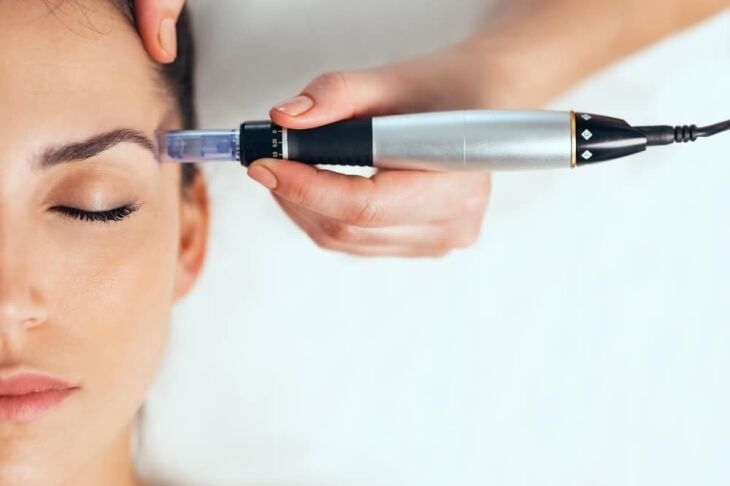
What Is Microneedling? Your Complete Medspa Guide
Microneedling is a minimally invasive cosmetic procedure that uses very fine, sterile needles to create thousands of tiny channels in the skin, triggering your body’s natural healing response and stimulating new collagen and elastin. It’s used to improve skin texture, soften fine lines, fade certain types of scarring, and reduce the look of enlarged pores. The procedure is performed by trained medical aestheticians or providers and typically requires a series of sessions for full results.
That’s the technical answer. The practical answer is that microneedling has become one of the most flexible treatments in modern medical aesthetics — used by patients in their twenties for early prevention, by patients with mature skin for rejuvenation, and by anyone dealing with stubborn texture or scarring that creams can’t reach. This guide explains how it actually works, what it can and can’t fix, and what to expect from your first session to long-term maintenance.
What is microneedling?
Microneedling, sometimes called collagen induction therapy (CIT), is a procedure that uses an instrument with many tiny sterile needles to create controlled micro-injuries in the surface and middle layers of your skin. The needles are short — typically between 0.5 and 2.5 millimeters depending on the area treated — and the channels they create close within hours.
The “injury” isn’t a wound in any meaningful sense. It’s a precise signal that activates your skin’s repair process. Over the following weeks, your body responds by producing new collagen and elastin in the treated area. Those two proteins are what give skin its firmness and bounce. Production naturally declines with age, sun exposure, and lifestyle factors — microneedling reverses some of that decline by asking your skin to rebuild.
The modern version of microneedling is performed with electric devices that move the needles at controlled depths and speeds. Older “dermaroller” tools that you may have seen on social media work on the same principle but offer less precision. Medical-grade microneedling at a medspa uses devices with adjustable depth, single-use cartridges, and trained operators — which matters for safety, comfort, and result quality.
How does microneedling work?
The mechanism is simpler than it sounds. Here’s what’s happening at three levels: the science, the device, and your skin’s response over time.
The science of collagen induction therapy
When skin is injured at the right depth — not too superficial, not too deep — three things happen. First, growth factors and signaling molecules are released that initiate the repair cascade. Second, fibroblasts (the cells responsible for making collagen) are activated and begin producing new collagen fibers in the treated zone. Third, blood flow increases temporarily, delivering oxygen and nutrients that support regeneration.
This same cascade is responsible for how the body heals any small wound — but with microneedling, the injuries are too small to scar and too distributed to leave any visible mark. The result is a controlled, gradual remodeling of the skin without surgical intervention.
What the device does at skin level
The microneedling device uses an array of fine needles that oscillate rapidly to create thousands of vertical channels in the skin within a few minutes. The depth is adjusted based on the area treated and the concern being addressed — deeper for acne scars on the cheeks, more superficial for fine lines around the eyes.
A topical numbing cream is applied 20 to 30 minutes before the session, so the procedure itself is usually well tolerated. During treatment, most patients describe a sensation of light pressure or vibration. Sessions take 30 to 60 minutes including numbing.
How your skin responds in the days after
For the first 24 to 48 hours, your skin will look and feel like it has a moderate sunburn — slightly pink, slightly tight. Most patients return to work the next day with minimal makeup. By day three, the redness has faded substantially. Subtle improvements in skin texture and tone start to appear at around the two-week mark, with continued improvement over four to six weeks as collagen remodeling completes its first cycle.
The cumulative effect of a series of sessions is more pronounced than any single session. This is why microneedling is almost always recommended in a course of three to six treatments, spaced four to six weeks apart.
What can microneedling treat?
Microneedling is unusually versatile because the same mechanism — controlled collagen induction — improves a range of unrelated concerns. Here are the most common ones.
Acne scars and texture
Atrophic acne scars (the depressed kind, including “rolling” and “boxcar” types) respond particularly well to microneedling. The new collagen produced in the months after treatment gradually fills in the depressed areas, smoothing the surface. Older scars often need more sessions than newer ones, and very deep “ice pick” scars may need to be combined with other approaches.
Fine lines and wrinkles
Microneedling helps soften fine lines — particularly around the eyes, mouth, and on the forehead — by stimulating collagen and elastin production. It doesn’t act like Botox (which relaxes muscle movement) or fillers (which add volume). Instead, it improves the underlying quality and bounce of the skin so lines look softer at rest.
Enlarged pores
Pores look larger when the surrounding skin loses firmness and lets the pore opening relax. By improving collagen density around each pore, microneedling reduces the apparent size of pores over a series of sessions. The effect is most noticeable in the T-zone and cheeks.
Hyperpigmentation
For uneven skin tone, sun damage, and certain types of melasma, microneedling can improve the look of pigmentation over time, particularly when combined with appropriate topical treatments. This is one application where the choice of provider matters most — overly aggressive treatment in darker skin tones can sometimes worsen pigmentation, so a tailored protocol is essential.
Stretch marks
Newer stretch marks (still red or pink) respond better than older silvery-white ones, but both can show improvement. Several sessions are usually required, and results are most visible on the abdomen, thighs, and arms.
Microneedling vs traditional facials — what’s different
It’s a common question: if you already get facials regularly, do you need microneedling? The honest answer is that they do different things, and many patients use both.
A traditional facial works at the surface of the skin. It cleanses, exfoliates, hydrates, and often uses serums to address tone, texture, and hydration. Results are immediate and last days to weeks. Most facials don’t trigger collagen production in any meaningful way.
Microneedling works through the skin’s middle layer. It triggers your body to rebuild collagen and elastin over weeks and months. Results take time to appear but accumulate over a series of sessions and last for many months after the last treatment.
Both are valid tools. Many patients alternate them across a year: microneedling in a focused series of 3–6 sessions, and gentle facials for maintenance and skin health in between.
What to expect at your appointment
Here’s a realistic timeline for your first microneedling appointment. Total visit length is usually 60 to 90 minutes.
- Consultation: your provider reviews your skin, your concerns, and your medical history. Sun exposure in the previous two weeks, retinol use, and recent peels can affect timing.
- Cleanse and prep: makeup is removed and the skin is cleansed thoroughly.
- Numbing: a topical anesthetic is applied to the treatment area and sits for 20 to 30 minutes. This is the longest part of the visit and the reason for booking adequate time.
- The procedure: the microneedling device is moved across the skin in sections, with depth adjusted as needed. Most patients describe sensations as pressure or warmth rather than pain.
- Calming serum: hyaluronic acid or growth factor serums are applied to support healing.
- Post-care guidance: your provider walks you through the next seven days — what to use, what to avoid, and when to expect changes.
After microneedling — the 7-day recovery
Here’s how recovery typically unfolds. Individual experiences vary depending on depth and skin sensitivity.
- Day of treatment: skin is pink, slightly warm, and may feel tight. No makeup for the first 24 hours. Use only the products your provider recommends.
- Day 1: most patients return to work. Mineral SPF is essential. Avoid heavy workouts that day.
- Days 2 to 3: redness fades to a mild flush. Some patients have very subtle peeling — moisturize, don’t pick.
- Days 4 to 7: skin starts feeling smoother and looks brighter. Subtle improvements begin to show.
- Week 2 onward: collagen remodeling continues. Improvements in texture, tone, and firmness become more visible over the following 4 to 6 weeks.
How many sessions will you need?
Most concerns require a series of three to six microneedling sessions spaced four to six weeks apart. Maintenance sessions every six to twelve months keep results active over the long term.
For specific concerns:
- General rejuvenation and texture: typically 3 sessions, 4–6 weeks apart.
- Acne scarring: typically 4–6 sessions, 4–6 weeks apart. May need additional sessions for deeper scars.
- Stretch marks: typically 6+ sessions, 4–6 weeks apart.
- Hyperpigmentation: typically 3–5 sessions plus appropriate topical maintenance.
Is microneedling right for you?
Microneedling is generally a strong fit for patients who want to improve skin texture, address mild-to-moderate scarring, soften early signs of aging, or refine their skin’s tone and firmness without surgery or extensive downtime. It’s particularly suitable for patients in their late twenties through fifties, though properly tailored protocols work well across a wider age range.
It may not be the right starting treatment if you have active acne breakouts, certain skin conditions (eczema or psoriasis in the treatment area), open wounds, or are pregnant. Your provider will review your medical history and recommend appropriate sequencing if microneedling needs to wait for another concern to settle first.
At Esthetica, microneedling is part of our facial treatments menu, and it’s available at multiple of our clinics including Tampa, King of Prussia, and Lakeland. The complimentary consultation is genuinely diagnostic — if microneedling isn’t right for what you’re trying to achieve, we’ll tell you what is.
Frequently asked questions
Is microneedling safe?
Yes — when performed by a trained professional with sterile, single-use cartridges. Microneedling has an excellent safety profile and is FDA-cleared. The most common side effects are temporary redness and mild peeling, both of which resolve within a few days.
How is microneedling different from microdermabrasion?
Microdermabrasion exfoliates the surface of the skin to reveal fresher skin underneath. Microneedling penetrates the middle layer to stimulate collagen and elastin production. They address different goals — microdermabrasion is great for immediate radiance; microneedling is for long-term structural improvement.
Can microneedling be combined with other treatments?
Yes. It’s often paired with hyaluronic acid serums, growth factor topicals, or other in-office treatments depending on your concerns. Your provider will recommend a sequence that maximizes results without overlapping recovery times.
Will I see results after one microneedling session?
You’ll likely notice subtle improvements in skin texture and radiance within two weeks of your first session, but the cumulative effect of a series is what delivers the strongest results. Most patients see clear, lasting improvements after the third session.
How long do microneedling results last?
The collagen produced as a result of treatment can last for years. To maintain ongoing improvement, most patients return for a single maintenance session every six to twelve months after completing their initial series.
Is microneedling painful?
With topical numbing applied 20–30 minutes before the session, most patients describe the procedure as mildly uncomfortable rather than painful. Sensations of pressure or warmth are common; sharp pain is not.
Start your microneedling journey with a complimentary consultation
If you’re considering microneedling for skin texture, scarring, tone, or general rejuvenation, the first step is an honest conversation with a trained provider. We’ll review your skin, your goals, and your timeline, and recommend a protocol that fits your specific concerns. Book your complimentary consultation to get started.

