
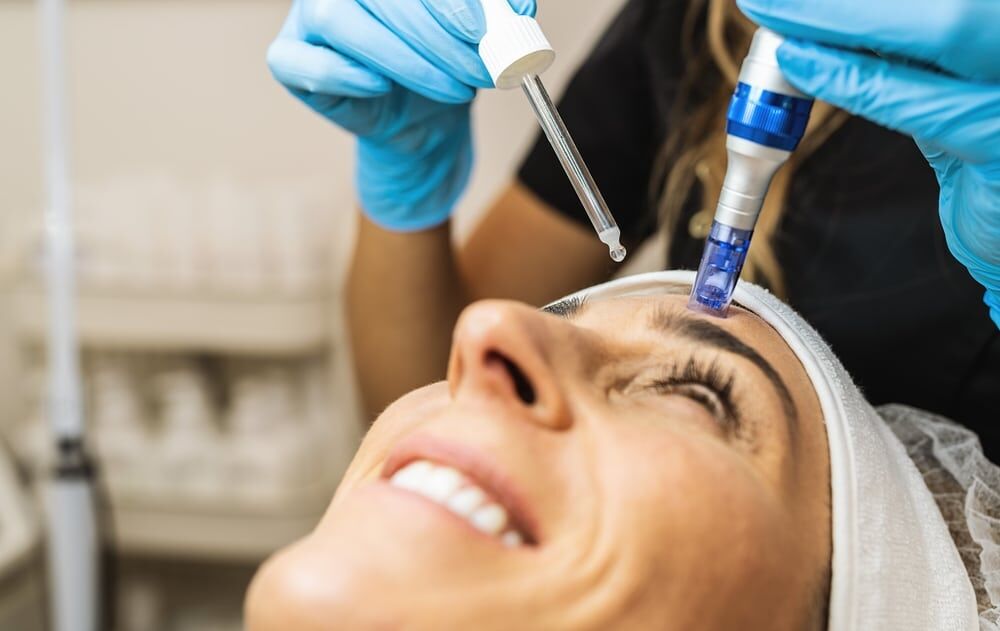
Microneedling and chemical peels both improve skin quality, but they work in opposite directions: microneedling rebuilds the skin from within using fine needles to trigger collagen, while a chemical peel resurfaces from the top down using acids to exfoliate. As a quick rule, microneedling tends to win for texture and acne scars, and chemical peels tend to win for tone, sun damage, and fine surface lines. The right choice depends on your specific concern, your skin type, and how much downtime you can spare, so this guide breaks down the differences and helps you decide.
The essentials
- Microneedling: needles create micro-channels that stimulate collagen; best for texture, pores, and acne scars.
- Chemical peel: acids exfoliate the surface; best for tone, sun spots, and fine lines.
- Downtime: microneedling means a day or two of redness; peels range from none (light) to a week or more (deep).
- Skin type: microneedling is often favored for darker skin tones because it does not rely on chemical exfoliation of pigment.
- You can do both: many plans alternate the two over time, but never on the same day.
What is the main difference between microneedling and a chemical peel?
The core difference is the mechanism. Microneedling uses a device with very fine needles to create controlled micro-injuries in the skin, which prompts the body’s natural wound-healing response and stimulates new collagen and elastin. It is sometimes called collagen induction therapy for exactly that reason. A chemical peel, by contrast, applies a solution of acids to the surface that dissolves the bonds between dead skin cells so the outer layers shed, revealing fresher skin underneath.
In short, microneedling works from the inside out to rebuild structure, while a peel works from the outside in to resurface. That distinction drives almost every other difference, from which concerns each one treats best to how much recovery you should plan for. If you want a foundation on either treatment first, see our complete microneedling guide and our guide to what a chemical peel is.
There is also a difference in how the results arrive. A chemical peel often shows much of its benefit fairly quickly, once the old surface sheds and the fresh skin appears, which is why peels are popular before events. Microneedling, on the other hand, works on a slower curve: because it is asking your body to build new collagen, the most meaningful improvements develop over weeks and across a series of sessions. Neither is better in the abstract; they simply suit different timelines and goals.
Which concerns does each treatment address best?
Both treatments improve overall skin quality, but each has clear strengths. Microneedling shines for anything related to texture and depth, while peels shine for anything related to surface tone and color. Matching the tool to your top concern is the most reliable way to choose.
| Concern | Microneedling | Chemical peel |
|---|---|---|
| Acne scars and texture | Strong fit | Mild to moderate help |
| Large pores | Strong fit | Moderate help |
| Uneven tone and sun spots | Moderate help | Strong fit |
| Fine lines and dullness | Good | Strong fit |
| Overall radiance | Good | Good |
The American Academy of Dermatology notes that microneedling can help reduce the appearance of acne scars and improve skin texture (AAD), while the American Society for Dermatologic Surgery describes chemical peels as treating sun damage, uneven pigmentation, and fine lines by exfoliating the skin (ASDS).
How much downtime does each one have?
Downtime is one of the most practical deciding factors. Microneedling typically causes redness similar to a mild sunburn for one to two days, with most people back to normal quickly. Chemical peels vary widely by depth: a light, superficial peel can have almost no downtime, while a medium or deep peel can mean several days to a week or more of visible peeling and redness.
If you need to look presentable within a day or two, microneedling or a light peel is usually the better fit. If you can take a longer recovery window in exchange for a more dramatic resurfacing, a deeper peel may make sense. Either way, sun protection afterward is essential, because freshly treated skin is more vulnerable to the sun.
It also helps to plan around your calendar. Because microneedling redness is usually brief, it slots easily into a normal week. A medium or deep peel is better booked when you have a quieter stretch ahead and can stay out of strong sun while the skin renews. Whichever you choose, the days right after treatment are when sunscreen and gentle skincare matter most, since the new skin is fresh and more sensitive than usual.
Which is safer for darker skin tones?
For darker skin tones, microneedling is often the more cautious starting point because it does not rely on chemically exfoliating pigmented surface cells, which can sometimes trigger uneven pigmentation in deeper complexions. That said, many superficial peels are formulated to be safe across skin tones when performed by an experienced provider who selects the right solution and strength.
This is exactly the kind of nuance a consultation is for. A trained provider will assess your skin type, your history of pigmentation, and your goals before recommending either treatment or a tailored sequence. You can see how we approach both on our facial treatments service page.
Can you combine microneedling and chemical peels?
Yes, and many treatment plans use both, just not on the same day. Because they address different layers and concerns, alternating them across a series can deliver more complete results than either alone: peels to keep tone bright and microneedling to rebuild texture over time. The sequencing and spacing matter, so this should always be planned by a provider rather than improvised.
If your goals span several concerns at once, a combined plan is often the smartest route. Our overview of combining medspa treatments explains how providers stage complementary treatments safely for the best overall outcome.
How many sessions and how much do they cost?
Neither treatment is usually a one-and-done. For visible, lasting change, microneedling is typically done as a series of three to six sessions spaced roughly four to six weeks apart, because collagen builds gradually. Chemical peels are also commonly done in a series for superficial peels, while a single deeper peel can deliver more in one go at the cost of more downtime. Maintenance sessions keep results going in both cases.
Cost varies widely by region, provider, and the depth or add-ons involved, so the most reliable figure is a quote from your own clinic rather than an internet average. As a rule of thumb, light peels tend to be the most affordable per session, microneedling sits in the middle, and deeper, more intensive treatments cost more. When you compare, look at the cost of a full recommended series rather than a single session, because that is what actually delivers the result.
How do I choose between them?
The simplest way to decide is to name your top concern and your downtime tolerance. If your main issue is texture, enlarged pores, or acne scarring, and you can handle a day or two of redness, microneedling is usually the better starting point. If your main issue is uneven tone, sun spots, dullness, or fine surface lines, a chemical peel is typically the stronger choice, with the depth matched to how much recovery you can spare.
For many people the honest answer is that both have a role, just at different times and for different goals. That is why a professional assessment is so valuable: rather than picking a single winner, a provider can map your concerns to the right treatment, or the right sequence of treatments, for your skin type and timeline. The best result usually comes from a plan, not a one-off decision.
What does recovery look like, and how do I care for my skin afterward?
Aftercare is broadly similar for both treatments and centers on being gentle while the skin recovers. After microneedling, expect a day or two that feels and looks like a mild sunburn; keep the skin clean, skip active ingredients such as retinoids and strong acids for a few days, and avoid heavy sweating until the redness settles. After a peel, the skin may flake or peel visibly, and the golden rule is to let it shed on its own rather than picking, which can cause marks.
For both, two habits matter most: rigorous sun protection and good hydration. Freshly treated skin is more vulnerable to UV damage and to pigmentation problems, so daily broad-spectrum sunscreen is non-negotiable in the days afterward, and a simple, fragrance-free moisturizer keeps the barrier comfortable. Your provider will give you a tailored aftercare sheet, and following it closely is what protects your investment in the treatment and gives you the smoothest possible result.
Frequently asked questions about microneedling vs chemical peel
What is the main difference between microneedling and a chemical peel?
Microneedling creates tiny channels with needles to stimulate collagen from within, while a chemical peel applies acids to exfoliate and resurface the surface. One rebuilds the skin, the other resurfaces it.
Which is better for acne scars?
Microneedling is often preferred for depressed acne scars and overall texture because it stimulates collagen in the deeper skin. Peels can help mild scarring and the marks left after breakouts.
Which is better for sun damage and pigmentation?
Chemical peels are typically the stronger choice for uneven tone, sun spots, and surface pigmentation, because they directly exfoliate pigmented cells at the surface.
How much downtime does each have?
Microneedling usually means a day or two of redness. Peel downtime ranges from almost none for light peels to a week or more of visible peeling for deeper ones.
Can you combine microneedling and chemical peels?
Yes, many people alternate them in a treatment plan, but not on the same day. A provider can sequence them safely to address multiple concerns over time.
This article is educational and not medical advice. The best treatment for your skin is determined at a consultation with a trained provider. Last updated June 2026.

