The main difference is permanence and speed: electrolysis is the only method the FDA recognizes as permanent hair removal, but it treats one hair at a time, while laser hair removal delivers fast, long-term reduction across large areas in fewer visits. Electrolysis works on any hair or skin color, whereas laser works best when there is contrast between dark hair and the surrounding skin. Below we compare how each one works, cost, pain, sessions, who each suits, and how to choose between them.
The essentials
- Permanence: electrolysis is FDA-classified as permanent removal; laser provides permanent reduction.
- Speed: laser covers large areas quickly; electrolysis is slow, hair by hair.
- Hair and skin type: electrolysis works on all colors; laser works best on dark hair.
- Sessions: laser needs about 6 to 8; electrolysis needs many sessions over a year or more.
- Best use: laser for legs, back, and Brazilian; electrolysis for small areas, light or gray hair, and finishing work.
How does each method work?
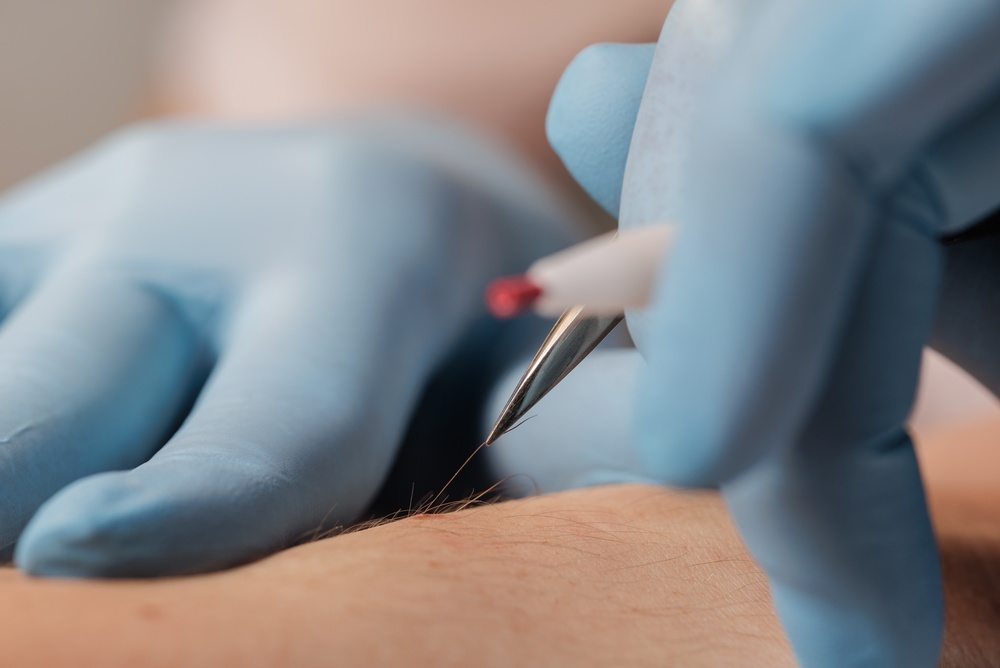
Electrolysis and laser both target the hair follicle, but through different physics. Electrolysis inserts a fine probe into each individual follicle and delivers a small electrical current that destroys the growth cells, one follicle at a time. Because it does not rely on pigment, it works on any hair color, including gray, red, and blonde, and on any skin tone. Laser hair removal sends pulses of light that are absorbed by the pigment (melanin) in the hair, heating and disabling the follicle. It treats many hairs at once across a wide spot, which is why it is so much faster, but it depends on the hair being darker than the skin around it.
That pigment dependence used to make laser risky for darker skin, but modern devices have changed this. Our guide to laser hair removal for dark skin explains which wavelengths are validated to treat deeper skin tones safely.
Electrolysis vs laser hair removal: side by side
The table below compares the two methods on the factors that usually decide the choice. Neither is universally better; the right pick depends on your hair, your skin, the area, and your priorities.
| Factor | Electrolysis | Laser hair removal |
|---|---|---|
| Result | Permanent removal (FDA) | Permanent reduction |
| Works on | All hair and skin colors | Best on dark hair, any skin tone with the right device |
| Speed | Slow, one follicle at a time | Fast, large areas per session |
| Sessions | Many, often weekly or biweekly for a year or more | About 6 to 8, spaced 4 to 8 weeks |
| Best areas | Small zones, face, stray or light hairs | Legs, back, underarms, bikini, Brazilian |
| Pain | Stinging at each follicle | Snapping or warmth across the area |
Which one is actually permanent?
Electrolysis is the only hair removal method the FDA classifies as permanent. By destroying each follicle’s growth cells directly, it can stop hair from regrowing for good in the treated follicles. Laser hair removal is cleared for permanent hair reduction, which means a large, lasting decrease in the number of hairs rather than total elimination, usually with light maintenance over time. For many people that reduction is more than enough, especially on large areas, but if your goal is complete and permanent removal of every hair in a small zone, electrolysis is the method designed for that.
How do cost and time compare?
Cost and time are where the two methods diverge most. Electrolysis is usually priced by time, often per 15, 30, or 60 minute session, and because it treats one follicle at a time, a large area can require many long sessions spread over a year or more. That makes electrolysis time-intensive and, for big zones, expensive in total. Laser is priced per area or per package, and a full course of 6 to 8 sessions clears a large area like the legs or back far faster. As a rule, laser is the more practical choice for large areas, while electrolysis is more economical and sensible for small zones or for finishing the stray hairs laser leaves behind.
For a full breakdown of laser pricing by area and how packages work, see our electrolysis guide for the per-time side, and review the technology on our laser hair removal service page.
Does it hurt, and what is recovery like?
Both treatments cause some discomfort, but it feels different. Electrolysis produces a brief stinging or heat sensation at each follicle as the current is applied, which can feel tedious over a long session because every hair is treated individually. Laser feels like a quick snap or a warm rubber band against the skin, repeated rapidly across the area, and most sessions are short. Recovery for both is mild. Temporary redness and slight swelling around the follicles are common and usually settle within hours to a day. Sun protection afterward is important for both, since treated skin is more sensitive to UV.
Which method is right for you?
Choose based on your hair color, the area, and your goal. Laser is the better fit if you have dark hair and want to clear a large area like the legs, back, underarms, or a full Brazilian efficiently, accepting that light maintenance may follow. Electrolysis is the better fit if you have light, gray, red, or very fine hair that laser cannot target well, if you want true permanent removal of a small area, or if you need to tidy up stray hairs after a laser course. Many people use both: laser to clear the bulk quickly, then electrolysis to finish the hairs that remain. A consultation that looks at your hair and skin is the surest way to pick.
If you have already decided on laser and want area-specific guidance, our breakdown of how many laser hair removal sessions the face needs and our Brazilian laser hair removal sessions and cost walk through what to expect by zone.
How do you prepare for and recover from each treatment?
Preparation differs by method. For laser, you shave the area a day or two before so the energy targets the follicle rather than surface hair, and you avoid plucking, waxing, and sun exposure for a few weeks beforehand, since those remove the pigment target or raise the risk of irritation. For electrolysis, the hair needs to be visible enough for the probe to follow, so you avoid waxing or plucking but light trimming is fine. Recovery for both is mild: expect temporary redness and small bumps around the follicles that settle within hours to a day. Afterward, both call for gentle skincare and diligent sun protection, because treated skin is more sensitive to UV and to pigment changes.
How do you choose a safe provider?
Both treatments are safe in trained hands, and the provider matters more than the marketing. For laser, look for a clinic that uses medical-grade devices and can name the wavelength suited to your skin tone, since the wrong device on darker skin raises the risk of burns or pigment changes. For electrolysis, look for a certified electrologist who follows strict hygiene with single-use or fully sterilized probes, because the procedure breaks the skin at each follicle. In both cases, a consultation that examines your hair and skin, explains the plan, and sets honest expectations is the sign of a provider worth booking. Be cautious with at-home versions of either, which are far weaker and, used incorrectly, can cause burns or scarring.
Can you switch between the two methods?
Yes, and switching or combining is common. Some people start with laser to reduce dense, dark hair across a large area quickly, then move to electrolysis for the lighter or finer hairs that laser leaves behind, since those no longer have enough pigment for the laser to target. Others begin with electrolysis on a small area, then add laser if they decide to treat a larger zone. There is no need to commit to one method for life. A provider can re-evaluate your hair as it changes and adjust the plan, which is especially useful for hormonally driven hair that shifts in color and density over time.
Frequently asked questions about electrolysis vs laser
Is electrolysis or laser hair removal better?
Neither is better for everyone. Laser is faster and more practical for large areas with dark hair, while electrolysis is the only permanent option and works on any hair or skin color, which makes it ideal for small areas and light hair. The right choice depends on your hair, skin, and the area.
Does electrolysis work on gray or blonde hair?
Yes. Because electrolysis destroys each follicle with an electric current rather than targeting pigment, it works on gray, blonde, red, and very fine hair that laser usually cannot treat effectively.
Which is cheaper, electrolysis or laser?
For large areas, laser is usually cheaper in total because it clears the zone in 6 to 8 sessions, while electrolysis treats one hair at a time and needs many sessions. For small areas, electrolysis can be the more economical and permanent choice.
Can I use both electrolysis and laser?
Yes, and many people do. A common approach is to use laser to reduce the bulk of the hair on a large area, then use electrolysis to permanently remove the lighter or stray hairs that remain.
How many sessions does each method take?
Laser typically needs about 6 to 8 sessions spaced 4 to 8 weeks apart, plus occasional maintenance. Electrolysis needs many shorter sessions, often weekly or biweekly over a year or more, because it treats each follicle individually.
Is laser safe for dark skin?
Yes, with the right device. Modern wavelengths such as Nd:YAG are validated to treat darker skin tones safely. Choosing a clinic with technology suited to your skin tone is the key to a safe, effective result.
This guide is educational and not medical advice. The best method for you depends on your hair, skin, and goals, so book a consultation for a personalized recommendation. Last updated June 2026.