
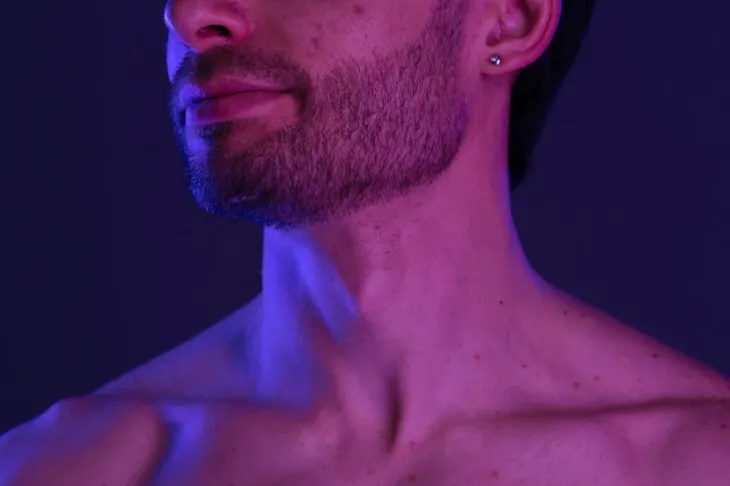
Yes, you can have laser hair removal on your neck, including the front, the sides and the nape. Neck Laser Hair Removal is a named service at all seven Esthetica Medspa locations, and it serves two fairly different groups: women clearing fine hair from the nape and hairline, and men cleaning up a beard line or dealing with persistent razor bumps. The skin here is thinner and more reactive than facial skin, which changes the aftercare more than it changes the plan. Here is what each subzone involves.
Updated October 19, 2026 by the Esthetica Medspa clinical team.
The essentials
- The neck is treated as subzones: front, sides, nape and beard line, which is why a single neck price is rarely the whole story.
- The American Academy of Dermatology puts the typical course at 2 to 6 treatments, once every 4 to 6 weeks.
- Neck skin is thinner than cheek skin, so expect more redness for the first 1 to 3 days, which is the AAD’s stated duration for common side effects.
- Laser can reduce the hair that triggers razor bumps. It is not a cure for pseudofolliculitis barbae, and the AAD advises seeing a dermatologist for persistent cases.
- Neck Laser Hair Removal is listed at all seven of our locations, so the subzone you want can be quoted at any site.
Can you get laser hair removal on your neck?
Yes, and it is one of the more straightforward areas to treat when the hair has pigment. The laser targets pigment in the hair shaft, converts light into heat and damages the follicle, so dark hair on the neck responds the same way dark hair anywhere else does. What makes the neck distinctive is not the hair but the skin: it is thinner, it moves, and it sits directly over structures that make careful technique matter.
The practical consequence is that a good neck treatment is slower and more deliberate than the same surface on a leg would be. It is also where the pretreatment conversation about skin tone matters most, because the AAD notes that treating patients with dark skin must be performed very carefully, and that some changes to skin color are permanent.
Which parts of the neck can be treated, front, sides or the nape?
All of them, and they are usually quoted separately because they are different jobs with different goals. The front of the neck and the beard line are shaping work for most men. The nape is clearing work for most women. The sides sit between the two.
| Subzone | Who usually treats it | Typical goal | Sessions to plan for | Note |
|---|---|---|---|---|
| Nape, back of the neck | Mostly women | Clear fine hair below the hairline | 2 to 6, every 4 to 6 weeks | Fine hair may respond less than coarse hair |
| Front of the neck | Mostly men | Clear below the beard line | 2 to 6, upper end for coarse hair | Thinnest skin of the subzones |
| Sides of the neck | Both | Continuity with jawline or beard | 2 to 6, every 4 to 6 weeks | Often combined with the front |
| Beard line | Mostly men | Define an edge, not remove the beard | 2 to 6, upper end is common | Agree the exact line before session one |
Session ranges and intervals are the AAD figures applied to each subzone. The subzone split reflects how the area is actually treated and quoted; the exact map for you is agreed at consultation.
Who is a good candidate for neck laser hair removal?
Anyone with pigmented neck hair, healthy skin in the area and realistic expectations about a course rather than a single visit. Beyond that, candidacy splits fairly cleanly by what you are trying to achieve.
Women treating the nape and fine neck hair
The nape is usually about tidying a hairline rather than removing dense growth, and the hair there is often finer than hair elsewhere on the body. Finer hair carries less pigment, so it responds less predictably, and the AAD figure of a 10% to 25% reduction after the first treatment is a useful expectation to hold rather than hoping for a clear nape in one visit. Where hair is genuinely light or grey, electrolysis is the more realistic route, and our comparison of electrolysis versus laser hair removal explains why.
Men treating the beard line and recurring razor bumps
For men the neck is usually the most irritated part of the shave, and the goal is a clean edge plus relief from daily irritation rather than a bare neck. Beard line work clears below and outside the line you choose, so the beard itself stays intact, and the line has to be agreed before the first pulse because it is difficult to undo. Coarse, dense neck hair typically needs the upper end of the AAD range. Our guide to laser hair removal for men covers the other male areas and how they are grouped.
How many sessions does the neck need?
Plan for the AAD range of 2 to 6 treatments, once every 4 to 6 weeks, and plan for the upper end on coarse beard line hair. The interval is not negotiable in any useful sense: only follicles in their active growth phase respond to a given treatment, so going sooner treats fewer follicles rather than finishing faster. Your provider decides when the next session is safe.
The AAD also notes that a patient may need maintenance treatments to keep an area hair free. On a beard line, where hormonal hair keeps arriving, that is a reasonable thing to expect rather than a sign the course failed.
What does neck laser hair removal cost?
The neck sits at the lower end of any laser menu because the subzones are small, and the real variable is how many subzones you treat and how many sessions the hair needs. The American Society of Plastic Surgeons puts the average cost of laser skin treatments at $697, a procedure only figure that excludes related expenses, and that is the benchmark to compare a full course against.
Three practical cost notes. Bundling front and sides is usually better value than treating them in separate appointments. A beard line course on coarse hair tends toward the upper session count, so budget for the course rather than per visit. And insurance does not cover cosmetic hair removal, including when the motivation is recurring razor bumps. Our laser hair removal cost guide sets out the pricing model across areas, and current pricing per location is confirmed at consultation.
Does it help with ingrown hairs and razor bumps on the neck?
It can reduce the hair that triggers them, and that is a meaningful benefit, but it is not a cure for the condition itself. Razor bumps, clinically pseudofolliculitis barbae, happen when shaved hair curls back into the skin and provokes an inflammatory response. Fewer and finer hairs means fewer opportunities for that to happen, which is why many men pursue laser for relief rather than for aesthetics.
Two things worth being straight about. First, the AAD’s own guidance on razor bumps points to a dermatologist for persistent cases, noting that with customized treatment you can get relief and avoid permanent changes to your skin. Second, the AAD warns that men who continue to get razor bumps can develop permanent deep grooves and raised scars on the face, so persistent bumps are a reason to see a dermatologist rather than to keep shaving through it. Laser can sit alongside that care. It does not replace it, and we will say so at the consultation.
What should you expect during and after a neck session?
The session itself is short, and most people describe each pulse as a quick hot snap with cooling between passes. The AAD reports that the most common side effects are discomfort, swelling and redness, and that these are minor and last 1 to 3 days.
On the neck specifically, expect that redness to be more visible than it would be on a leg, because the skin is thinner and collars rub. Plan for a loose neckline for a day, skip the gym, the sauna and hot showers for about 24 hours, and use sunscreen, since the neck catches sun that the face often does not. Treated hair sheds over the following one to three weeks, which patients regularly mistake for regrowth.
Shave the area before you come. Do not wax, pluck or thread in the weeks before, because the laser needs the hair shaft in an intact follicle. Rarer effects, which the AAD describes as uncommon with a qualified provider, include blistering, cold sore outbreaks, infection, scarring and lightening or darkening of the skin.
Where can you get neck laser hair removal at Esthetica Medspa?
Neck Laser Hair Removal is a named service at all seven Esthetica Medspa locations: Tampa, San Antonio, Bellevue, King of Prussia, Newark, Lakeland and Louisville. Because it is listed as its own area rather than folded into a face package, the subzone you actually want can be mapped and quoted directly. The full area list and the devices we use are on our laser hair removal service page.
Frequently asked questions
Can you laser the back of your neck?
Yes. The nape is one of the standard neck subzones and is commonly treated to clear fine hair below the hairline. Fine, lightly pigmented hair responds less predictably than coarse dark hair.
How many sessions does neck laser hair removal take?
The AAD puts the typical course at 2 to 6 treatments, once every 4 to 6 weeks. Coarse beard line hair usually sits at the upper end, and maintenance sessions afterwards are common.
Can I keep my beard and still laser my neck?
Yes. Beard line treatment clears below and outside the line you choose and leaves the beard intact. Agree the exact line with your provider before the first session, because it is hard to reverse.
Will laser cure my razor bumps?
No. Laser can reduce the hair that triggers razor bumps, which often reduces the irritation, but it is not a cure for pseudofolliculitis barbae. The AAD advises seeing a dermatologist for persistent cases, since untreated razor bumps can lead to permanent grooves and scarring.
Is neck laser hair removal permanent?
The cleared claim is permanent hair reduction, which the FDA defines as a long term, stable reduction in the number of hairs regrowing, measured at 6, 9 and 12 months after a completed course. Maintenance may be needed, particularly on hormonally driven beard line hair. Results vary.
Does the neck hurt more than other areas?
Often slightly, because the skin is thinner and more reactive. The sensation is still brief, cooling helps, and the AAD lists the common side effects as minor and lasting 1 to 3 days.
Sources
- American Academy of Dermatology: laser hair removal FAQs, read October 19, 2026 (2 to 6 treatments, 4 to 6 week interval, 10% to 25% reduction after the first treatment, side effects lasting 1 to 3 days, rare effects, maintenance, skin tone guidance).
- American Academy of Dermatology: razor bump remedies, read October 19, 2026 (see a dermatologist for persistent razor bumps; continuing razor bumps can cause permanent deep grooves and raised scars).
- FDA 510(k) K180353, diode laser hair removal device indications for use, read October 19, 2026 (definition of permanent hair reduction measured at 6, 9 and 12 months).
- American Society of Plastic Surgeons: laser hair removal cost, read October 19, 2026 ($697 average for laser skin treatments, procedure only).
- Esthetica Medspa Google Business Profile service taxonomy for all seven locations, internal reference, October 2026 (Neck Laser Hair Removal listed at every location).
This article is general information, not medical advice. Pseudofolliculitis barbae and persistent skin irritation require assessment by a dermatologist. Treatment suitability is assessed in person by a licensed provider, and individual results vary.


