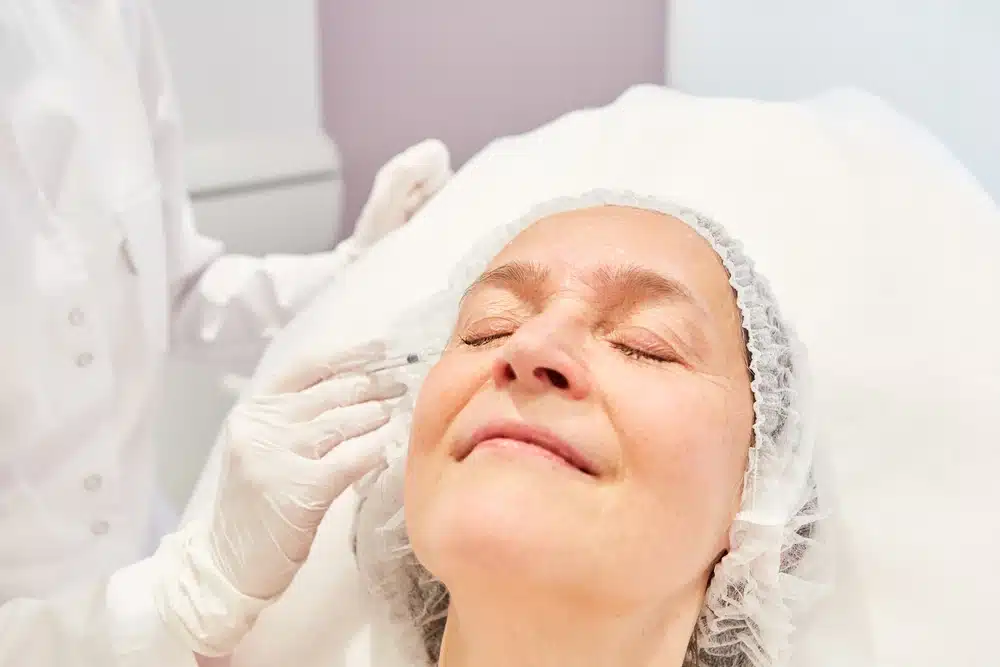
Dermal fillers in King of Prussia are used to restore volume, soften folds and refine facial contours without surgery, and most appointments at our Main Street location take under an hour. If you have been searching for filler near King of Prussia and landing on generic pages, this guide covers what we actually treat, which products are approved for which area, how long results hold and what a first visit looks like.
The essentials
- Dermal fillers are gel implants placed under the skin to add volume or smooth folds. They are regulated by the FDA as medical devices, not cosmetics.
- Our King of Prussia location offers JUVÉDERM treatments, dermal fillers, lip fillers, jawline contouring fillers and chin fillers.
- Duration depends on the product and the area. Cheek volume can hold up to two years, lip results are usually shorter.
- Cost is quoted per syringe, so the number of syringes your face actually needs is what moves the price, not a list rate.
- The most serious risk is accidental injection into a blood vessel. It is uncommon, and injector training and anatomy knowledge are what reduce it.
- Results vary between patients. A consultation comes first, always.
On this page
- What dermal fillers actually do
- Cheek and midface filler
- Jawline and chin filler
- Under-eye and tear trough filler
- Lip filler
- Which product for which area
- What drives the cost
- Safety, risks and who should not have filler
- Your first visit in King of Prussia
What do dermal fillers actually do?
Dermal fillers add volume where the face has lost it or where it never had enough. The FDA describes them as gel-like substances injected under the skin to create a smoother or fuller appearance, and notes they may be used to correct age-related deficits or to augment the cheek, chin or lips (FDA, Dermal Fillers).
That distinction matters more than most patients expect. Filler is a volume tool. It does not relax muscle, so it will not soften a frown line caused by repeated expression, and it does not resurface skin, so it will not fix surface texture or pigment. Those are different treatments with different tools. When someone comes in unhappy with a previous result somewhere else, the cause is often that the wrong tool was used for the problem, not that the product failed.
Most of the fillers used today are made from hyaluronic acid, a sugar molecule the body already produces. That chemistry gives them a practical advantage: they can be dissolved with an enzyme called hyaluronidase if a result is not what you wanted or if a complication needs to be reversed quickly. Collagen stimulators such as poly-L-lactic acid work differently, prompting your own collagen to build over months rather than filling on the spot.
Which areas do we treat? Cheek and midface filler
Midface volume loss is the change most people notice first, usually in their late thirties or forties. Fat pads descend, the bone of the midface remodels, and the result reads as flatness under the cheekbone and a heavier fold running to the mouth. Restoring volume higher on the cheek often improves the lower face at the same time, because a good part of that fold is a shadow cast by what sits above it.
JUVÉDERM VOLUMA XC is indicated for deep injection for cheek augmentation to correct age-related volume deficit in the midface in adults over 21, and manufacturer data supports results lasting up to two years (JUVÉDERM, cheek filler). Placement is done deeply, against or near the bone, which is why anatomical knowledge counts for more here than product choice. Our team walks through this in more detail in our guide to the best dermal fillers for your face, area by area.
Jawline and chin filler
Jawline and chin work is structural rather than corrective. A weak chin projection or a soft jaw angle can make the lower face look heavier than it is, and adding definition along that border often does more for a profile than treating any single line. FDA approval here is specific: JUVÉDERM VOLUMA XC gained approval for improvement of chin retrusion in adults over 21 in June 2020 (AbbVie).
Jawline contouring fillers and chin fillers are both on the service list at our King of Prussia clinic. In practice these are often combined with cheek support, because treating a jaw in isolation can look disconnected from the rest of the face.
Under-eye and tear trough filler
The under-eye area is the most technically demanding place on the face to inject, and the one where patient expectations and anatomy most often disagree. Hollowing under the eye casts a shadow that reads as a dark circle, and filling that hollow can genuinely lift the look of tiredness. But if the real problem is pigment, loose skin or a prolapsed fat pad rather than volume loss, filler will not help and can make the area look worse.
JUVÉDERM VOLBELLA XC was approved by the FDA in February 2022 for the improvement of infraorbital hollows in adults over 21 (AbbVie). Galderma followed with Restylane Eyelight, approved in June 2023 for correction of under-eye hollows (Galderma). If you are weighing filler against lasers or topicals for this area specifically, our comparison of under-eye wrinkle treatments works through the decision by cause rather than by product.
Lip filler
Lip filler is the area where patients are most worried about looking overdone, and the fear is reasonable, because the lip is small and small differences show. The usual approach is conservative: less product than most people expect, placed to restore shape and border definition rather than to add bulk, with the option to build gradually across appointments. Lip fillers are offered at our King of Prussia location, and our full lip fillers guide covers products, longevity and aftercare in depth.
Which filler product is approved for which area?
FDA approval is granted for a specific product in a specific area, based on clinical study data for that use. This table lists approvals we can point to directly. Availability of individual products varies, and product selection is decided at consultation.
| Product | FDA-approved use cited | Approval | Reported duration |
|---|---|---|---|
| JUVÉDERM VOLUMA XC | Cheek augmentation, age-related midface volume deficit, adults over 21 | 2013 | Up to 2 years |
| JUVÉDERM VOLUMA XC | Improvement of chin retrusion, adults over 21 | June 2020 | Up to 1 year (chin) |
| JUVÉDERM VOLBELLA XC | Improvement of infraorbital hollows, adults over 21 | February 2022 | Up to 1 year |
| Restylane Eyelight | Correction of under-eye hollows | June 2023 | Up to 18 months |
| Sculptra (poly-L-lactic acid) | Fine lines and wrinkles in the cheek region | April 2023 | Up to 2 years |
Sources: JUVÉDERM, AbbVie 2020, AbbVie 2022, Galderma 2023, Galderma, Sculptra. The FDA maintains a current list of approved dermal fillers.
What drives the cost of dermal fillers in King of Prussia?
Filler is priced by the syringe, which is why a single advertised number rarely survives contact with a real face. Four things move the total: how many syringes the correction actually needs, which product is used, how many areas are treated in one visit, and whether you are building a result or maintaining one.
A patient restoring midface volume after significant weight loss will need more product than someone refining a lip border. Both are reasonable treatments and they are not comparable purchases. The honest answer is that we quote after assessing the face, and we would rather tell you a plan will take two appointments than under-treat to hit a number. If a provider quotes you a firm price before looking at you, that is worth noticing.
One more piece of context worth having: search interest tells us what people in this area are actually shopping for. Google Ads data for the United States puts monthly search volume at 27,100 for under eye filler and 14,800 for cheek filler, while the King of Prussia service-plus-city searches are much smaller in raw volume but far higher in intent (DataForSEO, US, August 2026). Local demand here is specific, not casual.
Is dermal filler safe? The risks worth knowing
Fillers have a long safety record when they are FDA-approved products injected by trained clinicians, but they are medical devices and they carry real risks. The FDA is direct about the most serious one: unintentional injection into a blood vessel, which can block blood supply to tissue. The agency notes the chance of this happening is low, but that resulting complications can be serious and may be permanent, including tissue necrosis, vision abnormalities including blindness, and stroke (FDA).
Common and expected side effects are far more mundane: swelling, bruising, tenderness and small lumps that settle over days. The FDA also advises against buying filler products online, since they may be counterfeit or not approved for use in the United States, and against any needle-free injection device.
Filler is generally not appropriate if you have an active skin infection at the treatment site, a known allergy to a component of the product, or certain bleeding disorders, and it is not studied for use in pregnancy or breastfeeding. Bring your full medication list, including blood thinners and supplements, to your consultation. Our guide on how to find a qualified medspa injector covers the questions worth asking any provider, including ours.
What happens at your first visit in King of Prussia?
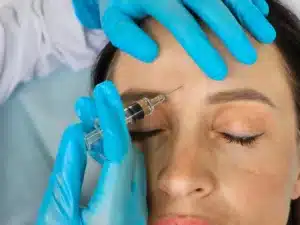
The appointment starts with an assessment, not a needle. We look at your face at rest and in movement, ask what bothers you in your own words, and check whether filler is the right answer at all. Some patients are better served by a skin treatment, and saying so is part of the job.
If we proceed, numbing cream or a product containing lidocaine keeps the treatment comfortable, and injection itself usually takes fifteen to thirty minutes depending on the areas. You can expect some swelling for the first day or two and possible bruising for up to a week. Most patients return to normal activity immediately, though we advise skipping strenuous exercise, alcohol and heat for the first twenty four hours. Results settle over about two weeks, which is the right moment to review rather than the day after.
You can find directions, hours and parking on our King of Prussia location page, and the full range of products and areas on our dermal fillers service page.
Frequently asked questions
How long do dermal fillers last in King of Prussia?
It depends on the product and the area. Cheek volume from JUVÉDERM VOLUMA XC is reported to last up to two years, under-eye products around one year to eighteen months, and lips typically less because the area moves constantly. Metabolism, treatment area and how much product was placed all affect the answer, and results vary between patients.
Do dermal fillers hurt?
Most patients describe pressure rather than sharp pain. Topical numbing cream is applied first, and many modern fillers contain lidocaine, which takes the edge off as the product goes in. The under-eye and lip areas are the most sensitive.
Can dermal fillers be reversed?
Hyaluronic acid fillers can be dissolved with hyaluronidase, an enzyme that breaks down the product, usually within a day or two. Collagen stimulators such as poly-L-lactic acid cannot be reversed this way, which is a reason to be conservative with them at a first treatment.
How soon will I see results?
Hyaluronic acid fillers show volume immediately, but swelling in the first few days can make the result look larger than the final outcome. Judge it at about two weeks. Collagen stimulators are different: they build gradually over two to three months.
Which dermal filler treatments are available at the King of Prussia clinic?
Our King of Prussia location offers JUVÉDERM treatments, dermal fillers, lip fillers, jawline contouring fillers and chin fillers, alongside wrinkle relaxer treatments and a range of facial and laser services. Availability of individual products can change, so confirm at booking.
Booking a consultation
If you are considering filler, the useful first step is a conversation with someone who will assess your face before recommending anything. Esthetica Medspa is a women-led practice, and our King of Prussia team sees patients from across Montgomery County and the Main Line. Book a consultation and we will tell you honestly what we think will work, including when the answer is that filler is not what you need.