
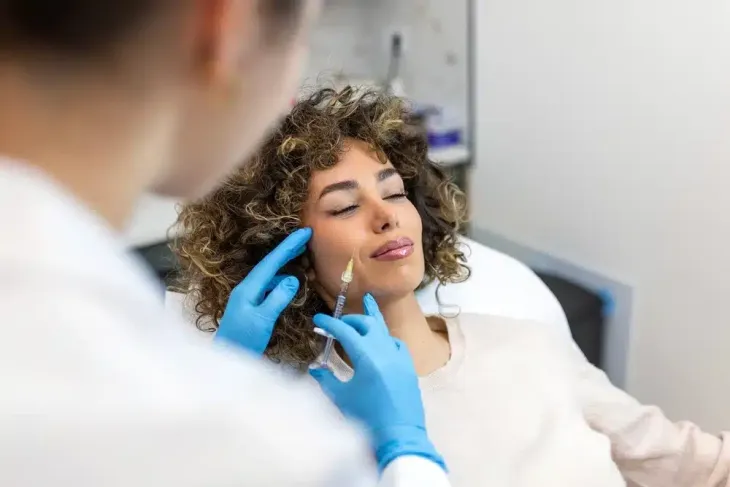
Botox vs fillers is really a question of what is causing your concern: Botox relaxes the muscles that create expression lines, while dermal fillers add volume where it has been lost or where you want more. Lines that appear when you move usually point to Botox, and lines or hollows visible at rest usually point to filler.
The essentials
- Botox is a prescription neurotoxin that temporarily relaxes targeted muscles. It softens lines caused by movement, such as frown lines, forehead lines and crow’s feet.
- Dermal fillers are FDA-approved medical device implants that add volume. They are used for deeper folds, lips, cheeks, chin and areas that look hollow.
- Botox results typically last about three to four months. Hyaluronic acid fillers last roughly 6 to 12 months, and some newer products up to two years, depending on the product and area.
- Hyaluronic acid filler can be dissolved with an enzyme if needed. Botox cannot be reversed but wears off on its own.
- Many patients use both, because they solve different problems.
What is the difference between Botox and fillers?
Botox works on muscles. Tiny amounts are injected into specific facial muscles, where it blocks the signal that makes them contract. With the muscle relaxed, the skin above it creases less. The American Society of Plastic Surgeons notes that as the effect wears off, muscle activity and the lines return.
Fillers work on volume. The FDA describes dermal fillers as medical device implants that help create a smoother or fuller appearance in the face. Most fillers used today are made from hyaluronic acid, a substance found naturally in the skin that attracts water and adds structure.
So the two are not competitors. One stops a line from being folded in again and again. The other fills a line, fold or hollow that is already there.
How do Botox and fillers compare side by side?
| Feature | Botox | Dermal fillers |
|---|---|---|
| What it is | Prescription neurotoxin (botulinum toxin type A) | Medical device implant, most often hyaluronic acid |
| How it works | Relaxes the muscle that creates the line | Adds volume under the skin |
| Best for | Lines that appear with expression | Folds, lines at rest, lost volume, lips, cheeks, chin |
| When results appear | Some change within a couple of days, full effect up to a week | Visible right away, settling as swelling goes down |
| How long it lasts | About three to four months | 6 to 12 months for many HA products, up to two years for some |
| Reversible? | No, wears off on its own | HA fillers can be dissolved with an enzyme |
| Most serious risk | Rare spread of effect beyond the injection site | Rare accidental injection into a blood vessel |
Sources: ASPS, botulinum toxin results; ASPS, how long do dermal fillers last; FDA, dermal fillers; Botox Cosmetic prescribing information.
Which is better for wrinkles?
It depends on the type of wrinkle. A simple test helps: look in the mirror with your face completely relaxed, then frown, raise your brows and smile.
- Lines that appear only with movement (the 11s when you frown, forehead lines when you raise your brows, crow’s feet when you smile) are dynamic lines. Botox is usually the first choice.
- Lines that stay when your face is at rest, such as deeper folds from the nose to the mouth, are static lines. These often need filler, sometimes combined with Botox if muscle movement keeps deepening them.
- Hollows and flattened areas, such as under the eyes or in the cheeks, are about volume, so filler is the tool.
Botox Cosmetic is FDA-approved for frown lines, crow’s feet, forehead lines and vertical neck bands, according to its prescribing information. Absorbable fillers are approved for moderate to severe facial wrinkles and folds, and for adding volume to the lips, cheeks, chin and back of the hand, according to the FDA.
Botox vs fillers for lips: which do you need?
For lips, the two do very different things. Lip filler adds volume and shape to the lips themselves. A lip flip uses a small amount of neurotoxin in the muscle around the mouth so the upper lip rolls slightly outward, showing more of the lip without adding volume. Patients who want a subtle change often start with a lip flip, while those who want fuller lips usually choose filler. Read our lip flip vs lip filler comparison, or see our lip filler treatment page.
Lips are also an area where filler can wear off faster. The ASPS explains that constant muscle movement breaks filler down more quickly in mobile areas such as the lips.
Which lasts longer?
Fillers usually last longer. Botox results typically last about three to four months, according to the ASPS. Hyaluronic acid fillers placed close to the skin often last 6 to 12 months, deep injections may last up to 12 months, and some newer products up to two years, per the ASPS. The FDA notes that how long a filler lasts depends on the material and where it is injected. For more on neurotoxin timing, read how long Botox lasts.
Do fillers ruin your face?
It is one of the most common questions patients ask, and it usually comes from seeing overfilled results. Filler does not damage your face when it is placed by a qualified injector in appropriate amounts. Problems tend to come from too much product, poor placement or a provider without enough training. The FDA advises choosing a licensed health care provider with experience in dermatology or plastic surgery, and says filler injection should be considered a medical procedure, not a cosmetic treatment. A good injector will tell you when you do not need more.
What are the risks of each?
Both are generally well tolerated when performed by qualified providers, but neither is risk free.
- Botox: temporary redness, swelling or bruising at the injection sites and headache are common. Less often, a nearby muscle is affected and an eyelid or brow feels heavy until the product wears off. All botulinum toxin products carry an FDA warning about rare spread of toxin effect; seek care right away if you have trouble swallowing, speaking or breathing.
- Fillers: bruising, redness, swelling, pain and itching are common, according to the FDA. The most serious risk is accidental injection into a blood vessel, which can cause tissue damage, vision problems or stroke. This is rare, and it is the main reason the injector’s training and anatomy knowledge matter so much.
What is each appointment like?
A Botox appointment is quick. After a short consultation, your provider marks the injection points, cleans the skin and places a few small injections with a very fine needle. Most people return to their day right away. You will be asked to stay upright for a few hours and avoid rubbing the area, and a follow-up about two weeks later is a good time to review the result.
A filler appointment takes a little longer. Many fillers contain a numbing agent, and a topical numbing cream may be used as well. The provider injects in small amounts, checking symmetry as they go, so you can see the change before you leave. Swelling and bruising are common for a few days, especially in the lips. Avoiding strenuous exercise for the rest of the day helps. For lips specifically, our lip filler aftercare guide covers the first week.
Can you get Botox and fillers together?
Yes, and many patients do. A common plan uses Botox for frown lines and crow’s feet and filler for the cheeks or the folds around the mouth, so each product handles what it does best. Relaxing a muscle can also help filler in the same area look smoother for longer. Your provider will decide whether to treat both in one visit or space them out, based on the areas and your comfort.
If you are considering volume in specific areas, our guides to under-eye filler and cheek filler explain what each treatment involves.
How do you decide what is right for you?
The honest answer is a consultation. An experienced injector watches how your face moves, looks at it at rest and asks what bothers you most. Sometimes the answer is Botox alone, sometimes filler alone, and sometimes a small amount of each. At Esthetica Medspa, a women-led medspa with seven U.S. locations, we offer both Botox treatments and dermal fillers, so the plan follows your concern rather than a single product.
Frequently asked questions
Is Botox or filler better for forehead lines?
Forehead lines that appear when you raise your brows usually respond best to Botox. If a line is still visible at rest, your provider may suggest a combination approach.
Is Botox or filler better for under the eyes?
Hollows under the eyes are about volume, so filler is the usual tool. Crow’s feet at the outer corners of the eyes are expression lines, which are typically treated with Botox.
Which is cheaper, Botox or fillers?
Cost depends on the number of units or syringes, the areas and your location. Because fillers usually last longer, compare the cost over a year rather than per visit.
Can fillers be removed?
Hyaluronic acid fillers can be dissolved with an enzyme, according to the ASPS. Botox cannot be reversed, but it wears off on its own in a few months.
Which one shows results faster?
Fillers show results right away, though some swelling settles over the following days. Botox can take a couple of days to start working and up to a week for the full effect.
Can I get Botox and fillers on the same day?
Often, yes. Many patients have both in one appointment. Your provider will confirm whether it suits the areas you are treating.
Not sure whether you need Botox, filler or both? Book a consultation and we will build a plan around your goals.


