
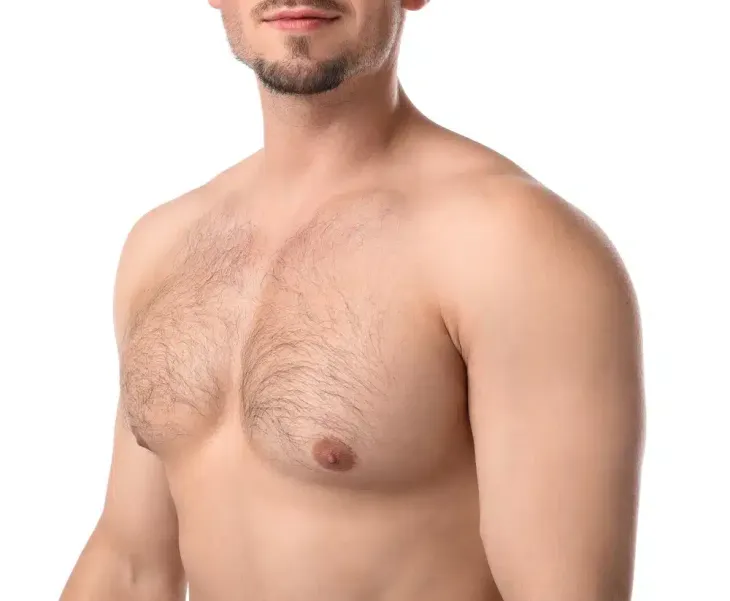
Laser hair removal for men works the same way it does for women, but coarse male hair on the back, chest and beard line usually needs more sessions and different settings. The American Academy of Dermatology puts the typical course at six sessions or more, and men treating dense areas often sit at the upper end of that. The goal is long-term hair reduction rather than a single permanent fix. Here is what each area involves, how many sessions to plan for, what it costs, and the two mistakes that cost men results.
Updated October 5, 2026 by the Esthetica Medspa clinical team.
The essentials
- The AAD states that removing unwanted hair “can take 6 sessions or more,” and dense male areas such as the back and chest typically need the higher end.
- Men’s laser hair removal is a named service at all seven Esthetica Medspa locations, with beard line, chest, back and neck listed as treatable areas.
- Expect long-term reduction in hair count and thickness, with periodic maintenance, rather than total permanent removal.
- Beard line work is shaping, not clearing: the aim is a clean edge on the neck and cheek, and relief from razor bumps.
- Insurance does not cover laser hair removal, so plan the full course as a package rather than one session at a time.
Does laser hair removal work on men?
Yes, and it works on the same principle for everyone: the laser targets pigment in the hair, converts light to heat, and damages the follicle so it produces finer, sparser hair or stops producing it. What changes for men is the input. Male body hair is often thicker, denser and rooted deeper, particularly on the back, chest, shoulders and face.
Denser hair absorbs more energy, which is good for results and demanding on technique. It means careful settings, proper cooling and a provider who is willing to spread the course over more sessions rather than pushing power to finish early. Our comparison of hair reduction treatments and what actually works puts laser next to the alternatives.
Which areas do men usually treat?
Back, chest, shoulders, neck and the beard line are the five most commonly requested male areas, and the AAD lists the back, chest, neck, shoulders, armpits, face and legs among the areas dermatologists treat. Across all seven Esthetica Medspa locations, men’s laser hair removal is a named service, with beard line, chest, back and neck appearing as separate treatable areas rather than being bundled into a generic package.
| Area | Typical goal | Session count to plan for | Notes |
|---|---|---|---|
| Full back | Large reduction in density | 6 to 8 or more | Largest male area; longest appointment |
| Chest and abdomen | Reduction, often not total clearing | 6 to 8 or more | Many men ask for thinning, not bare skin |
| Shoulders and upper arms | Blend with treated back | 6 to 8 | Usually treated with the back for an even edge |
| Neck and beard line | Clean edge, fewer razor bumps | 6 or more | Shaping work; the beard itself is preserved |
| Full body | Staged plan across areas | Sequenced over months | See our full body guide for how areas are grouped |
Session ranges are planning figures based on the AAD’s “6 sessions or more” guidance plus the practical reality that denser hair needs more passes. Your own count depends on hair color, thickness, density, the area and your hormones. Source: American Academy of Dermatology, laser hair removal overview, read October 5, 2026.
If you are planning several areas at once, our guide to full body laser hair removal, cost, sessions and areas explains how areas are grouped and sequenced.
How many sessions will a man need?
Plan for six to eight sessions on dense areas, spaced several weeks apart, and expect a maintenance session once or twice a year after that. The AAD’s own figure is “6 sessions or more,” and that lower bound tends to describe finer hair in smaller areas rather than a full male back.
The spacing matters as much as the number. Laser only affects follicles that are in their active growth phase on the day you are treated, and only a fraction of your hair is in that phase at any time. That is why the course is spread out, and why finishing six sessions in six weeks would waste most of them.
Is laser hair removal permanent for men?
The honest answer is long-term reduction rather than a guarantee of permanence. The AAD states that after a course, “laser hair removal is permanent on most areas of the body,” while also noting that treatment “can be repeated when the hair regrows.” Both statements are true at once: most treated follicles stop producing visible hair, and some regrow, usually finer and sparser than before.
For men there is an extra variable. Androgen-driven hair on the chest, back and face can continue to be stimulated over time, so new follicles can become active years after a course finishes. That is not treatment failure; it is biology, and it is handled with occasional maintenance rather than starting over. We would rather set that expectation now than sell you permanence we cannot promise.
What does men’s laser hair removal cost?
Cost is driven by area size and session count, which is why a full back costs several times what a neck line does. Because insurance does not cover laser hair removal, as the AAD notes plainly, the useful comparison is the full course rather than a single visit, and most practices price packages accordingly.
Two numbers worth asking for before you book: the per-session price for your specific area, and how many sessions the package includes. A low per-session price across too few sessions is not a saving. Our 2026 laser hair removal cost guide breaks down pricing by area, and our comparison of laser versus shaving and waxing over time sets it against what you already spend on razors and wax.
Does it work on dark skin, and does hair color matter?
Yes, with the right device. Lasers target pigment in the hair, so darker and coarser hair responds best, and the challenge on deeper skin tones is protecting the surrounding skin while delivering enough energy to the follicle. Longer-wavelength lasers are the usual answer, and a provider who treats a range of skin tones routinely is the practical requirement.
Hair color is the bigger limitation. Grey, white, blond and red hair contain little of the pigment the laser targets, so results are poor regardless of skin tone. If a large share of your back or beard-line hair has gone grey, say so at the consultation, because electrolysis compared with laser hair removal is a more honest route for unpigmented hair. Our guide to laser hair removal on darker skin tones explains the device and safety side in more detail.
Can you laser the beard line without losing the beard?
Yes, and that is the most common male facial request: a defined neckline and cheek line, with the beard itself untouched. The treatment clears below and outside the line you want to keep, so the edge stays clean without daily shaving around it.
There is a second benefit that brings a lot of men in. Shaving coarse, curly beard hair causes ingrown hairs and razor bumps, and reducing hair density in the affected zone reduces the trigger. That is a genuine quality-of-life reason to treat the neck, separate from how it looks. Because the beard line is a design decision, mark the line you want with your provider before the first pass; it is far easier to agree on than to undo.
How do you prepare, and what should you avoid?
Shave the area within a day of your appointment, so the laser reaches the follicle instead of burning surface hair. Do not wax, pluck, thread or use depilatory creams for several weeks beforehand, because the laser needs the hair root in place to work. Avoid sun exposure and self-tanner on the area before and between sessions.
The two mistakes that cost men results are both scheduling ones: plucking or waxing between sessions, which removes the target, and stretching the gaps between appointments far past what was planned, which breaks the cycle the course is built around. Treated hair also sheds over one to three weeks after a session, which can look like regrowth and is not.
Where can you have men’s laser hair removal at Esthetica?
All seven Esthetica Medspa locations offer men’s laser hair removal as a named service, including Esthetica Medspa Newark, DE, which serves northern Delaware and the surrounding Philadelphia suburbs. Men’s back and chest work is among the requests we see most often at that location, and our Newark laser hair removal guide covers sessions and areas for that market specifically. You can review the treatment overview, including the areas we treat, on our laser hair removal service page.
Frequently asked questions
How many laser hair removal sessions do men need?
Plan for six to eight on dense areas such as the back and chest, in line with the AAD’s guidance of six sessions or more, then occasional maintenance. Finer hair in smaller areas may need fewer.
Is men’s laser hair removal permanent?
Expect long-term reduction in hair count and thickness rather than a guarantee of permanence. The AAD describes results as permanent on most areas while noting that treatment can be repeated when hair regrows. Hormonally driven hair may need maintenance.
Can I keep my beard and still treat my neck?
Yes. Beard line treatment clears below and outside the line you choose, leaving the beard intact. Agree the exact line with your provider before the first session.
Does it work on grey or blond hair?
Not well. The laser targets pigment in the hair, so unpigmented hair responds poorly. Electrolysis is the more realistic option for grey, white or blond hair.
Does it hurt more on the back and chest?
Denser, coarser hair generally means more sensation, often described as a hot snap. Cooling and appropriate settings keep it manageable, and most men tolerate full back sessions without numbing.
Will my insurance cover it?
No. The AAD states plainly that insurance does not cover laser hair removal, so it is an out-of-pocket treatment and worth planning as a full course.
Sources
- American Academy of Dermatology: laser hair removal overview, read October 5, 2026 (session count, treatable areas, permanence, insurance).
- Esthetica Medspa Google Business Profile service taxonomy for all seven locations, internal reference, October 2026 (men’s laser hair removal and area-level services).
This article is general information, not medical advice. Treatment suitability is assessed in person by a licensed provider. Individual results vary.


