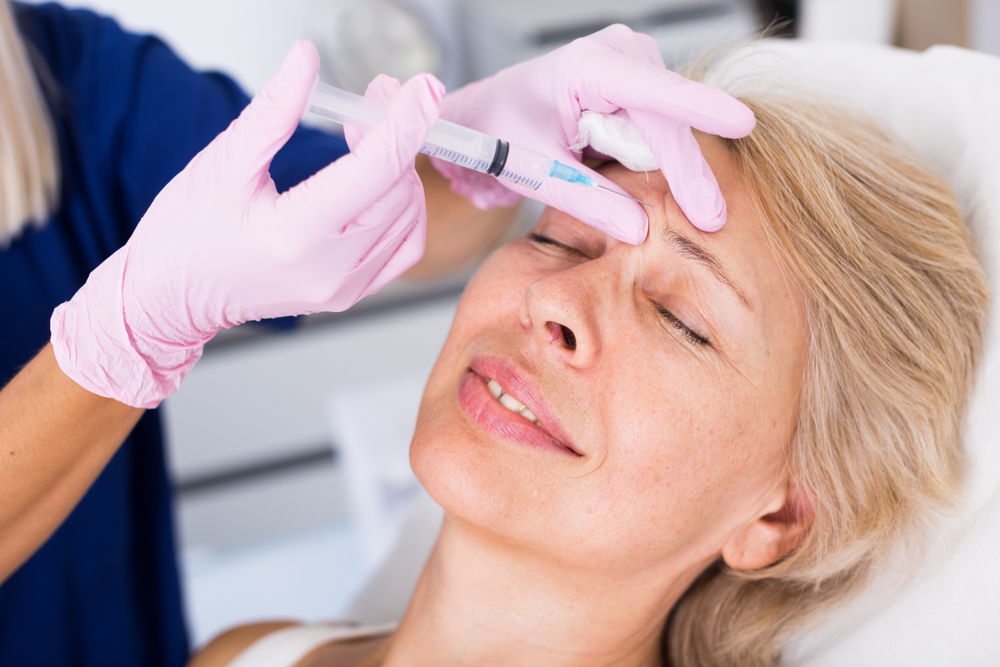
Botox in Wilmington, DE is priced per unit, and a typical first session lands in the low-to-mid hundreds depending on how many areas you treat. If you are comparing providers around Wilmington, the two numbers that matter are the price per unit and the number of units your plan actually requires, because a low sticker price with heavy dosing costs more than a fair price with conservative dosing. Here is how to read a Botox quote, what FDA-approved dosing looks like by area, and why many Wilmington patients end up treating at our Newark clinic ten minutes down I-95.
The essentials
- Botox is billed per unit, not per area or per visit. Always ask for both the unit price and the estimated units.
- The American Society of Plastic Surgeons puts the national average botulinum toxin session at $435.
- FDA-approved dosing: 20 units for frown lines, 24 units for crow’s feet, 20 units for forehead lines treated with frown lines.
- Results typically appear within days and last 3 to 4 months for most patients. Results vary.
- Our injectors are medically trained and work under physician oversight at the Newark clinic, just off I-95 near Christiana.
How much does Botox cost in Wilmington?
Expect quotes in the Wilmington area to be built from a per-unit price multiplied by your dosing plan. The ASPS national average for a botulinum toxin session is $435, which is a sensible anchor: a session well below that range should prompt questions about dilution or injector experience, and a session far above it should come with a clear explanation, such as a larger multi-area plan.
The variable that actually moves your total is dosing. Two providers can charge the same per unit and produce very different invoices because one plans 20 units and the other plans 50. That is not automatically upselling; a plan covering frown lines, forehead and crow’s feet legitimately needs more product than frown lines alone. The red flag is a provider who cannot explain why each area needs the units they propose. Our Botox in Newark guide walks through per-unit pricing mechanics in more depth.
How many units do the common areas take?
Allergan’s FDA-approved labeling for Botox Cosmetic defines standard dosing for the three treatment areas it is approved for. Real plans are personalized around muscle strength, anatomy and your goal, but the label is the reference point every quote should be able to relate to.
| Area | FDA-labeled dose | Notes |
|---|---|---|
| Frown lines (glabellar) | 20 units | The classic “11 lines” between the brows |
| Crow’s feet | 24 units total | 12 units per side |
| Forehead lines | 20 units | Approved for treatment together with frown lines |
Experienced injectors often start conservatively, especially on a first visit, and review the result after about two weeks. Muscles respond differently from person to person, and it is much easier to add a few units at a follow-up than to wait out an over-treated forehead. For a fuller area-by-area breakdown, including jawline and lip flip dosing, see our guide to how many Botox units each area takes.
What should you expect at a first appointment?
A proper first visit starts with a consultation, not a syringe. Your injector should ask what bothers you when you look in the mirror, watch how your face moves, and explain which lines Botox can soften and which it cannot. Dynamic lines, the ones created by expression, respond well. Static lines etched into the skin at rest respond partially at best, and an honest provider says so before treating.
The injections themselves take about ten minutes. Most patients describe quick pinches rather than pain, and normal life resumes immediately, with a few common-sense precautions for the first day. Early effects show within 2-5 days and the full result settles by two weeks, which is when a good clinic checks symmetry and dosing. From there, most patients maintain results with a session every 3 to 4 months. Individual duration varies with metabolism, dose and muscle strength.
One more thing worth bringing to that first visit: your calendar. If you are treating ahead of a wedding, a reunion or photos, tell your injector, because the ideal timing is two to three weeks before the event, enough for the result to settle and for any touch-up to be reviewed. Details on the product families, including how Dysport, Xeomin and Jeuveau compare to Botox, live on our Botox service page.
Why do Wilmington patients treat at our Newark clinic?
Because it is close, and because maintenance is the whole game with Botox. Our Newark clinic sits on Churchmans Road, just off I-95 near Christiana, roughly 15 minutes from downtown Wilmington and often closer than that for Elsmere, Newport, Stanton and Bear. A treatment you repeat three or four times a year needs to be convenient, or the intervals stretch and the result fades with them.
The other reason is the standard of care. Esthetica is a women-led group with seven clinics and more than 500,000 treatments performed over 18+ years. Injections at the Newark clinic are done by medically trained providers under physician oversight, consultations are complimentary, and first-time plans are deliberately conservative with a two-week review. That combination, clinical credentials without the surgery-center markup, is the niche a good med spa should occupy.
What mistakes should first-time Botox patients avoid?
Four come up again and again in consultations, and all four are avoidable. The first is shopping by price alone. Botox is a prescription medication injected into facial muscles; the cheapest offer in the area is exactly the place where questions about dilution, product sourcing and injector training matter most. The second is expecting Botox to fix static lines. Lines that are visible when your face is completely at rest are etched into the skin, and while relaxing the muscle can soften them over time, they often need a different tool, such as a filler or a resurfacing treatment. An honest injector tells you this before you spend anything.
The third mistake is chasing a frozen look, or fearing one so much you under-treat. Modern dosing aims for softened movement, not paralysis, and the two-week review exists precisely to calibrate that balance for your face. The fourth is skipping the follow-up. The review visit is where your injector checks symmetry, records what your muscles actually did with the dose, and refines the plan, which is how second and third treatments get better rather than staying generic.
Does preventative Botox make sense for younger patients?
Sometimes, and the reasoning matters more than the age. Preventative Botox treats expression lines before they harden into static creases, and it can be a reasonable choice for patients in their late twenties or thirties who see early frown or forehead lines beginning to linger after the expression relaxes. Dosing for prevention is typically lighter than corrective dosing, which also means lower cost per session.
The honest caveats: not everyone needs it, starting earlier does not obligate you to treat forever, and a provider who pitches preventative Botox to every young face that walks in is running a sales script rather than an assessment. At our Newark clinic the consultation is complimentary precisely so that a “not yet” costs you nothing.
What does aftercare look like?
Botox aftercare is light, which is part of its appeal, but the first day has a few rules worth following. Stay upright for about four hours after treatment, skip strenuous exercise for 24 hours, and avoid rubbing or massaging the treated areas, including face-down massages and tight hats or headbands across the forehead. The goal of all three is the same: keep the product where your injector placed it while it binds.
After that, live normally. Small red bumps at injection points typically fade within the hour, and any minor bruising can be covered with makeup the next day. Expect the timeline to run in phases: first movement changes around days 2-5, full effect by two weeks, steady results for the following two to three months, then a gradual return of movement that tells you a maintenance visit is due. Photograph yourself at two weeks; it is the most useful reference you can bring to your next appointment.
Frequently asked questions
How much is Botox per unit in the Wilmington area?
Per-unit prices vary by provider and are usually quoted at consultation. What you can benchmark is the session total: the ASPS reports a $435 national average per botulinum toxin session. Ask for the per-unit price and the planned units so you can compare quotes fairly.
How many units will I need for my first treatment?
It depends on the areas treated and your muscle strength. FDA-labeled dosing is 20 units for frown lines, 24 for crow’s feet and 20 for forehead lines treated with frown lines, and many first plans start conservatively below a full multi-area dose.
How long does Botox last?
Most patients see results for 3 to 4 months, with the full effect visible about two weeks after treatment. Duration varies with dose, metabolism and how strong the treated muscles are.
Is Botox safe?
Botox Cosmetic is FDA-approved for frown lines, crow’s feet and forehead lines, with a long safety record when injected by qualified providers. Side effects like temporary redness or bruising at injection points are common and short-lived; your injector should review risks with you before treating.
Botox or Dysport, which should I choose?
They are clinically similar neuromodulators with slightly different onset and diffusion characteristics. The honest answer is that injector skill matters more than the brand; a good provider recommends based on your anatomy and goals.
Do I need a consultation before booking Botox?
Yes, and at our clinic it is complimentary. A consultation confirms candidacy, sets the dosing plan and gives you the exact price before anything is injected.