
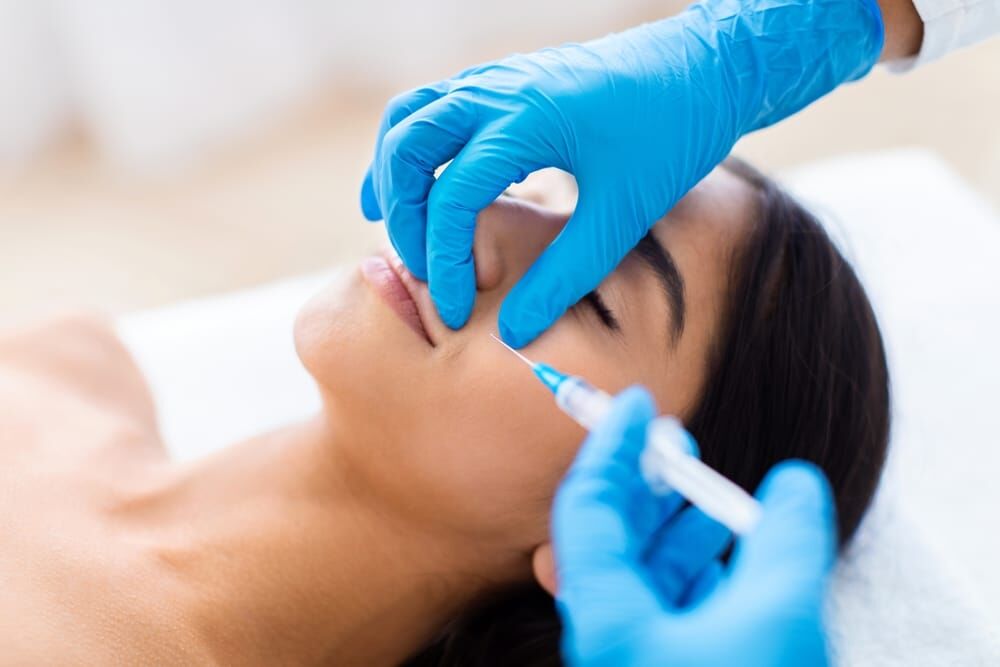
The most effective nasolabial folds treatment depends on what is causing them, but the leading non-surgical options are dermal fillers, collagen-stimulating injectables, and skin-tightening treatments. These lines from the nose to the mouth are completely normal, and softening them is one of the most common reasons people visit a med spa.
At Esthetica Medspa, we help patients understand why these folds deepen and which approach fits their face and goals. Here is a practical guide to what nasolabial folds are, what actually softens them, and what to expect from each option.
The essentials
- Nasolabial folds are the lines running from the sides of the nose to the corners of the mouth, and they are a normal part of facial anatomy.
- They deepen over time due to volume loss, skin laxity, and repeated facial movement.
- Dermal fillers are the most common non-surgical treatment, restoring volume to soften the fold.
- Collagen stimulators and skin-tightening treatments can address the underlying volume loss and laxity for longer-term support.
- Results and the best approach vary by person, so a consultation is the most reliable way to plan.
What are nasolabial folds, and why do they deepen?
Nasolabial folds are the natural creases that run from the base of the nose to the corners of the mouth, and everyone has them to some degree. They become more noticeable with age as the face loses volume and the skin loses elasticity, which lets the cheek tissue settle and deepen the fold.
Several factors drive this change. The midface loses fat and bone support over time, collagen and elastin decline, and decades of smiling and talking reinforce the crease. Sun exposure and genetics play a role too. Because the cause is often a combination of volume loss and skin laxity rather than the fold itself, the most effective treatments address what is happening above the fold, in the cheek and skin. Our area-by-area dermal filler guide explains how restoring midface volume can soften these lines indirectly.
What is the best treatment for nasolabial folds?
For most people, dermal fillers are the best first-line treatment because they restore lost volume and soften the fold with immediate, controllable results. The ideal choice still depends on the depth of the fold, your skin quality, and whether volume loss or laxity is the bigger driver.
In practice, providers often combine approaches. A hyaluronic acid filler can lift the fold directly, while restoring cheek volume higher up reduces the downward pressure that deepens it. For patients whose main issue is gradual volume loss, a collagen stimulator may be added. The table below summarizes the main non-surgical paths.
| Option | How it helps | Result timing | Typical longevity |
|---|---|---|---|
| Hyaluronic acid filler | Adds volume to soften the fold | Immediate | 6 to 18 months |
| Collagen stimulator | Rebuilds volume gradually | Weeks to months | Up to 2 years or more |
| Skin tightening (RF, microneedling) | Improves skin firmness and quality | Gradual | Varies |
| Topical retinoids | Supports skin quality over time | Gradual | Ongoing use |
Source: American Academy of Dermatology (AAD) and American Society for Dermatologic Surgery (ASDS) guidance on facial rejuvenation, 2026.
How do dermal fillers treat nasolabial folds?
Dermal fillers treat nasolabial folds by adding volume beneath the crease, which lifts and smooths the line for an immediate, natural-looking result. Hyaluronic acid fillers are the most common choice because they are adjustable and, if needed, can be dissolved.
Correcting nasolabial fold contour was one of the original FDA-approved cosmetic uses for several hyaluronic acid fillers, which speaks to how well-suited they are for this area. A skilled injector often places product strategically in the cheek as well as the fold itself, since lifting the midface reduces the crease at its source. Results are visible right away and typically last from several months to well over a year depending on the product. Collagen-stimulating fillers such as Radiesse offer another route, and our guide to Radiesse explains how that option works.
What non-surgical options exist besides filler?
Beyond fillers, non-surgical options include collagen-stimulating injectables, energy-based skin tightening, microneedling, and medical-grade topical retinoids. These address the skin laxity and volume loss that allow nasolabial folds to deepen, rather than only filling the crease.
Collagen stimulators rebuild support gradually for a longer-lasting, natural change. Radiofrequency and microneedling treatments improve skin firmness and quality over a series of sessions. Topical retinoids, used consistently, support collagen and skin texture over time. Many patients also ask about treating nearby concerns at the same time, and our guide to under-eye and midface rejuvenation shows how these areas are often addressed together for a balanced result.
Does Botox help nasolabial folds?
Botox is generally not the primary treatment for nasolabial folds because these creases are caused mainly by volume loss and skin movement of the cheeks rather than the muscle activity Botox targets. Injecting a neuromodulator directly into the fold is not the standard approach.
That said, a provider may use neuromodulators elsewhere in the face as part of a broader plan, since facial balance influences how the folds appear. The key point is that fillers, collagen stimulators, and skin treatments are the workhorses for this specific concern. A qualified injector will recommend the right tool for the cause rather than applying one product to every line.
What should you expect from treatment?
Most nasolabial fold treatments are quick in-office procedures with little downtime, though the experience varies by option. A filler appointment usually takes under an hour, and you can often return to normal activities the same day, with possible mild swelling or bruising at injection points.
Collagen stimulators and skin-tightening treatments work gradually and may require a series of sessions for full benefit. Whichever path you choose, realistic expectations matter. Softening the folds is achievable, but no treatment erases them permanently, and results depend on your anatomy and how your skin responds. You can review the full range of injectable options on our injectables services page and discuss a plan at a consultation.
A thoughtful provider will also consider your face as a whole rather than treating the fold in isolation. Because midface volume, skin quality, and even the position of the cheeks all influence how prominent the nasolabial lines look, the best plan sometimes addresses a nearby area to achieve a balanced, natural outcome. This is why two people with similar folds may be advised to take different paths. The aim is a refreshed version of your own face, not a heavily worked look. During your consultation, share any past treatments, your goals, and your timeline, and ask your provider to explain the reasoning behind their recommendation so you can make an informed choice.
How can you make nasolabial fold results last?
You can extend your results by protecting your skin, maintaining a stable weight, and scheduling maintenance treatments before the effect fully fades. While no approach makes the result permanent, good habits and timely touch-ups help you keep the softened look for longer.
Daily sun protection is one of the most effective long-term steps, since ultraviolet exposure accelerates the collagen breakdown that deepens these folds in the first place. A consistent skincare routine that supports skin quality, often including a medical-grade retinoid recommended by your provider, can help too. Significant weight fluctuations change facial volume and can affect how the folds look, so a stable weight supports steadier results. Finally, planning a maintenance appointment as your filler or stimulator begins to wear off keeps the correction smooth rather than letting it lapse and rebuild from scratch. Your provider can suggest a realistic schedule based on the product used and how your body responds.
Are there risks to treating nasolabial folds?
Treating nasolabial folds with injectables is generally safe in trained hands, but like any medical procedure it carries some risks, most of them mild and temporary. Common, short-lived effects include redness, swelling, tenderness, and bruising at the injection sites, which usually settle within a few days.
More significant complications are uncommon when an experienced, qualified provider performs the treatment, which is exactly why provider selection is so important for this area. The face has important blood vessels near the nasolabial region, and proper technique and anatomical knowledge reduce the risk of serious problems. This is not a place to choose a provider on price alone. A reputable med spa with medical oversight, injectors who understand facial anatomy, and a clear plan for managing any complication offers the safest path. During your consultation, ask about the injector’s experience with this specific area and how the practice handles rare adverse events.
Frequently asked questions
What causes nasolabial folds to get deeper?
They deepen mainly from age-related volume loss in the midface, declining collagen and elastin, and repeated facial movement. Sun exposure and genetics also contribute, which is why the folds become more pronounced over time even in people who care for their skin.
How long do filler results for nasolabial folds last?
Hyaluronic acid filler results for nasolabial folds typically last from 6 to 18 months depending on the product and your metabolism. Collagen stimulators can last up to 2 years or more because they work by rebuilding your own tissue support.
Can you get rid of nasolabial folds without fillers?
You can soften them without fillers using collagen stimulators, radiofrequency or microneedling for skin tightening, and consistent use of medical-grade retinoids. These options address skin laxity and volume loss, though results are more gradual than filler.
Are nasolabial fold treatments painful?
Most treatments cause only mild, brief discomfort, and providers often use numbing cream or fillers that contain a local anesthetic. You may notice temporary tenderness, redness, or minor swelling afterward, which usually settles within a few days.
Is treatment for nasolabial folds permanent?
No treatment permanently erases nasolabial folds, since they are a natural part of facial anatomy. Treatments soften their appearance for months to a couple of years, and maintenance helps sustain the result over time.

