
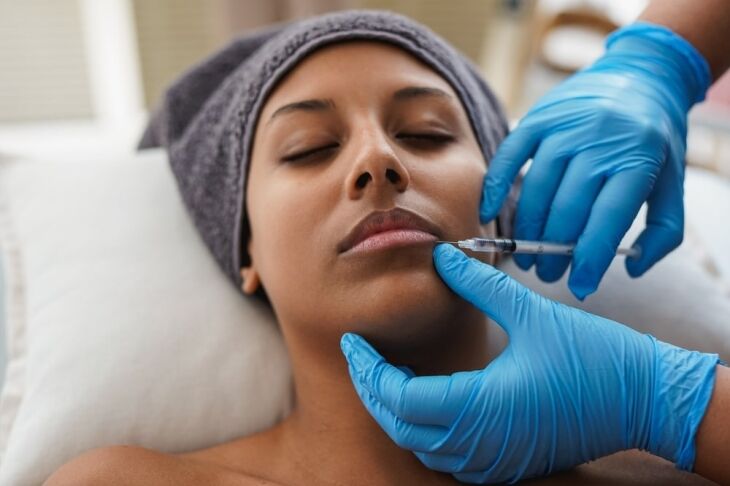
Lip Flip vs Lip Filler: Which One Is Right for You?
A lip flip uses a small dose of Botox to slightly evert the upper lip, lasting six to eight weeks and creating a subtle change. Lip fillers use hyaluronic acid to add real volume, last six to twelve months, and create a more visible result. They are different treatments designed for different goals, and many patients eventually try both — separately or in combination — to find what fits.
If you’re trying to decide between them, the most honest answer is “it depends on what you mean by ‘better lips.'” This guide walks through how each treatment works, what they cost (relatively), how natural they look, the downtime to expect, and how to talk to your injector about which one suits the lips you actually want.
Quick answer: what’s the difference?
Here’s the comparison at a glance. If you only have thirty seconds, this table covers most of the decision.
- Lip flip: 3–5 units of Botox into the upper lip. Subtle outward flip. Lasts 6–8 weeks. Lower cost. Minimal downtime. No actual volume added.
- Lip filler: 0.5–1 mL of hyaluronic acid into the lips. Real, visible volume. Lasts 6–12 months. Higher cost per session. Mild swelling for 24–72 hours. Shape and volume change.
A lip flip refines the lip shape you already have. A filler adds something that wasn’t there. That’s the cleanest way to summarize the difference. Now the longer answer.
What is a lip flip?
A lip flip is a Botox treatment, not a filler. Your injector places a few small units of Botox into the orbicularis oris — the circular muscle that surrounds your mouth and pulls the upper lip down when you smile or speak. By gently relaxing the very top edge of that muscle, the upper lip flips outward slightly, revealing more of the pink (vermilion) portion when you’re at rest or smiling.
The result is a touch more visible upper lip without any added volume. Patients often describe it as their lips looking “less tight” or “softer,” especially in photos. It’s also a popular choice for what’s called a “gummy smile” — when too much gum shows above the upper teeth when smiling — because the same muscle relaxation reduces how high the lip is pulled.
Lip flips typically last six to eight weeks, which is shorter than Botox in most other areas. That’s because the orbicularis oris is small and very active. The doses used are intentionally low to avoid affecting speech, drinking from a straw, or pronouncing certain sounds.
What are lip fillers?
Lip fillers use a hyaluronic acid (HA) gel — most commonly products in the JUVÉDERM, Restylane, or Versa families — injected into the lips to add real volume. Hyaluronic acid is a sugar molecule your body already produces; the filler version is a stabilized gel that integrates into the lip tissue and holds its shape for months.
What “adding volume” means in practice depends on the technique. A skilled injector can add subtle hydration that simply makes the lips look fuller and healthier (often called a “lip hydration” or “Russian lip” technique). The same product can also be used to reshape the lip border, build out a flatter upper lip, balance asymmetry, or correct an aging-related thinning of the lips. The volume isn’t generic — it goes exactly where the injector and patient plan it.
Filler results are visible immediately, though the final shape settles over the next two weeks as initial swelling resolves. Depending on the product chosen and your individual metabolism, results last six to twelve months, with some products holding closer to eighteen.
Side-by-side: lip flip vs lip filler
The decision usually comes down to six practical factors. Here’s how each treatment compares.
Procedure time and discomfort
Both treatments are quick. A lip flip takes about five minutes — a handful of tiny injections, generally well tolerated without numbing. Lip filler appointments are longer, usually thirty to forty-five minutes total, because most patients prefer to numb the lips with topical anesthetic or a dental block first. The injections themselves take ten to fifteen minutes.
Filler is more uncomfortable than a flip because the cannula or needle distributes a larger volume of product. Most patients describe filler as “manageable, not painful.” A flip is usually “barely noticeable.”
Cost
Lip flips are noticeably less expensive per session because they use a small amount of Botox — typically three to five units. Lip fillers cost more because of the product (filler syringes are priced by manufacturer and volume) and the time involved.
The cost-per-month comparison is more interesting than the cost-per-session. A lip flip lasts six to eight weeks, so you’d need roughly six to eight treatments per year to maintain results. Lip filler lasts six to twelve months, so you’d need one or two sessions per year. Annualized, lip flips may actually cost more than fillers depending on how strictly you maintain them.
How long results last
Lip flip: 6–8 weeks. Lip filler: 6–12 months. This is one of the biggest differences. If you only want to try a lip enhancement before committing, a flip is the lower-stakes choice — it’ll fade fully in two months no matter what. If you want consistent results, filler is more practical.
How natural it looks
Both can look completely natural with a skilled injector. The lip flip is naturally subtle because it doesn’t add volume — it just changes how the lip sits at rest. Filler can look natural too, but the result depends entirely on how much product is used and where. Conservative fillers placed in the right areas (lip body, vermilion border) look indistinguishable from naturally fuller lips. Overdone filler is what you see in viral “before and after” stories — and that’s a planning issue, not a product issue.
Downtime and recovery
Lip flip downtime: essentially none. You can go straight back to work. The only restrictions are no lying flat for four hours, no facial massage for 24 hours, and being aware that your upper lip may feel a little different for a week.
Lip filler downtime: minimal but visible. Most patients have some swelling for 24 to 72 hours and may have small bruises at injection sites for a few days. The lips look their best at about two weeks once everything settles. Plan filler at least two weeks before a major event (wedding, photo session, vacation).
When you’d combine both
Lip flip and lip filler aren’t mutually exclusive — they address different things. Many patients receive a small amount of filler to build the lip shape they want, then use a periodic flip to refine how the upper lip sits at rest. The combination is sometimes called a “soft enhancement” and can look more natural than larger doses of either treatment alone.
Who is the right candidate for each?
Some general guidelines based on what most patients describe as their goal.
Lip flip is often a good fit if you:
- Like the volume you have but feel your upper lip “disappears” when you smile.
- Want to try lip enhancement without a long-term commitment.
- Have a gummy smile you’d like to soften.
- Prefer a result that’s nearly imperceptible to anyone who doesn’t know you got something done.
Lip filler is often a better fit if you:
- Genuinely want more volume — not just a softer shape.
- Want a result that lasts months, not weeks.
- Have noticed thinning of your lips with age and want to restore what was there.
- Want to address asymmetry, a flat upper lip, or a less defined lip border.
Three real-world scenarios
To make this less abstract, here’s how the choice typically plays out for three common starting points.
Scenario 1 — the “subtle test.” A patient in her early thirties has full lips she’s happy with, but feels they look thinner in photos when she smiles widely. She tries a lip flip first. The result is exactly what she wanted — a touch more visible upper lip in photos — and she repeats it every two months. She never adds filler because she doesn’t actually want more volume.
Scenario 2 — the long-term plan. A patient in her late thirties has noticed her lips have thinned over the past several years. A lip flip wouldn’t address the actual issue, which is volume loss. She receives a conservative 0.5 mL of filler to restore what was there. Results last about ten months. She returns for a similar dose annually.
Scenario 3 — the hybrid. A patient wants more shape and more visible upper lip. She receives 0.5 mL of filler to build the lip body, then layers a periodic lip flip to soften how the upper lip sits when she smiles. The combination delivers a more polished look than either treatment alone, and she maintains the filler every nine to twelve months with flips in between.
How to decide — questions to ask your injector
If you’re booking a complimentary consultation, bring the questions below. They reveal whether the injector listens or tries to upsell.
- “Based on my lips today, what would a lip flip and a filler actually change?” An honest injector will be specific — not generic.
- “What’s the minimum dose you’d recommend?” Conservative answers are a good sign.
- “What happens if I don’t like the result?” For filler, the HA versions are dissolvable with hyaluronidase. For a flip, you wait 6–8 weeks for it to wear off.
- “How will you sequence this with anything else I’m considering?” If you’ll also receive other treatments, sequencing matters.
- “What’s the realistic ‘after’ photo at two weeks?” Avoid before-and-afters taken at day one when everything is swollen and impressive.
At Esthetica, both treatments are performed by medically trained injectors. You can read more about our Botox treatments, including the lip flip, or learn about our dermal fillers menu. The complimentary consultation is genuinely an assessment — if the right choice for your goals is the less expensive option, that’s what we’ll recommend.
Frequently asked questions
Can a lip flip make my lips look bigger?
Visually, yes — but only in the sense of revealing more upper lip when you smile or rest. There’s no actual increase in volume. If you want your lips to feel or look noticeably bigger, filler is what you’re looking for.
Is a lip flip safer than lip filler?
Both are very safe when performed by a trained injector. They have different risk profiles. A flip’s main side effect is mild difficulty with very specific sounds for the first few days (rarely persistent). Filler can cause swelling, bruising, and very rarely vascular complications — which is why placement matters. Neither is inherently safer than the other.
How soon after a lip flip can I get lip filler (or vice versa)?
You can combine them in the same visit if you’d like. Many injectors will do filler first and the flip last, or sequence the treatments two weeks apart so the effects can be evaluated separately.
Will a lip flip change how I talk or drink from a straw?
Occasionally, yes — for the first few days. Some patients notice slight difficulty with sounds like “p” or “b” or feel that a straw is harder to use. These effects almost always resolve within a week as your body adjusts to the dosage.
Can lip filler be dissolved if I don’t like it?
Yes — hyaluronic acid fillers can be dissolved with an enzyme called hyaluronidase. The dissolving treatment works within a few hours, and you can usually retreat with fresh filler about two weeks later if needed.
Plan your lip enhancement with confidence
The best lip enhancement is the one that fits your face, your goals, and your comfort with maintenance. A lip flip is honest, subtle, and reversible by time. Filler is more lasting and more dramatic — but only as dramatic as you want it to be. There’s no universally “better” choice, only the right one for what you’re actually trying to achieve. Our team is here to help you decide without pressure. Book your complimentary consultation or find your nearest Esthetica clinic to get started.

