“Ozempic face” is the term patients use for the hollowing, sagging and tired look that often shows up after rapid weight loss on GLP-1 medications like semaglutide (Ozempic, Wegovy) or tirzepatide (Mounjaro, Zepbound). The good news: most of what people see in the mirror is volume loss, and volume is something we can restore. This guide walks through the dermal fillers that actually work for Ozempic face, when each is the right call, how many sessions you should plan for, what results look like at three, six and twelve months, and how to know if you are a candidate.
What is “Ozempic face”?
The face has discrete fat pads that act as a scaffold for the skin above them. When you lose weight quickly, and GLP-1 patients often lose 12 to 20 percent of body weight inside a year, those facial fat pads shrink as well. The skin, which adapts more slowly than fat, loses its support and starts to look deflated. The most noticeable changes are flatter cheeks, hollow temples, a softer jawline definition, deeper nasolabial folds and a more visible tear trough under the eyes.
It is not the medication itself causing wrinkles. It is the speed and the magnitude of the volume loss. We see the same pattern after bariatric surgery, prolonged illness, or any rapid weight reduction. For a fuller explanation of the biology, including which facial fat pads are affected first and why the change appears so quickly, read our guide to what Ozempic face is and why it happens.
How dermal fillers restore volume, safely
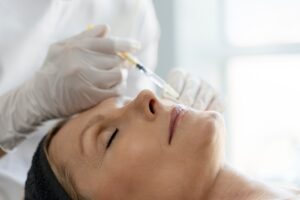
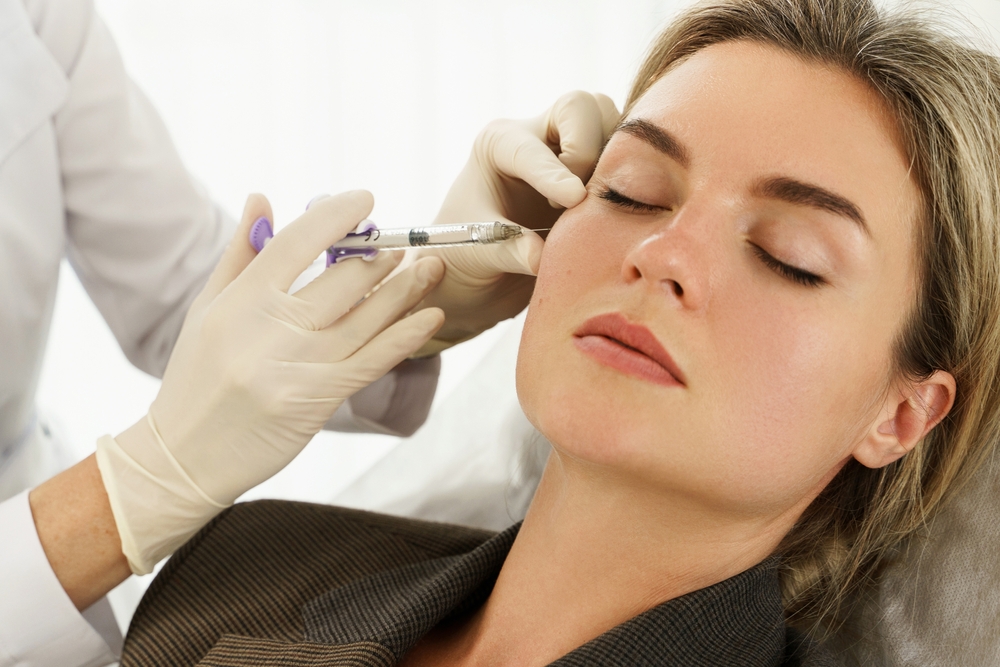
Dermal fillers replace the lost scaffold. Most are made of hyaluronic acid (HA), a sugar molecule your body produces naturally; some are collagen-stimulating products that work over months instead of days. A trained injector deposits the product into specific anatomical layers, lifting the skin from below rather than just smoothing lines on the surface.
For Ozempic face we usually combine two strategies: instant volume in the midface to restore the cheek-jawline curve, and a collagen stimulator to slowly rebuild structural support over four to six months. This combined approach lasts longer than instant-only filler and looks more natural over time.
The best dermal fillers for Ozempic face
There is no single “best” filler, each product has the rheology (thickness, lift, spread) that suits a particular area. These are the products we use most for GLP-1 patients:
- Juvéderm Voluma XC, High lift, smooth flow. The workhorse for cheek and midface restoration. Lasts up to two years when placed deep on bone.
- Restylane Lyft, Robust and structural. Excellent for cheekbones and jawline definition.
- Restylane Contour, Newer, softer than Lyft, designed specifically for the cheekbone area with natural movement.
- Sculptra, Poly-L-lactic acid. Not an “instant filler”, it stimulates your own collagen across three to four sessions and the result builds for six months. Ideal for diffuse volume loss across the temples and lower face.
- Radiesse, Calcium hydroxylapatite. Adds immediate volume and stimulates collagen. Strong for jawline definition. See our dedicated Radiesse filler explainer for results and longevity.
- Juvéderm Volbella XC, Soft and pliable. The product we reach for in the tear trough and lips, areas where you want subtlety, not lift.
Treatment areas, session by session
Most GLP-1 patients need volume in two or three areas. A typical treatment plan looks like this:
| Area | Common products | Typical volume | Goal |
|---|---|---|---|
| Cheeks (midface) | Voluma XC, Restylane Lyft, Restylane Contour | 2-4 syringes | Restore the apple of the cheek and lift the lower face |
| Temples | Sculptra (preferred) or diluted Voluma | 2-4 vials (Sculptra) over 3 sessions | Smooth the hollowed look on the sides |
| Jawline & chin | Radiesse, Restylane Lyft, Voluma | 2-4 syringes | Re-define the lower face after weight loss |
| Tear trough | Volbella, Restylane-L | 0.5-1 syringe per side | Soften shadows under the eyes |
| Nasolabial folds | Juvéderm Vollure, Restylane Refyne | 1-2 syringes | Reduce the lines from nose to mouth |
We rarely treat every area in one visit. Most plans are staged across two to three appointments four to six weeks apart so the face settles between sessions and you can see what each step adds.
How long results last
Hyaluronic acid fillers in the deep cheek typically last 12-24 months. In the lips and tear trough they last 6-9 months because the area moves more. Sculptra results build for four to six months and last around two years. Radiesse lasts 12-18 months. Once your weight has stabilized, maintenance becomes more predictable: a small touch-up annually keeps the structure where you want it.
Side effects, downtime and what to avoid
Common, expected side effects include redness, swelling and tenderness at the injection sites, usually 24 to 72 hours. Bruising happens in about 20 percent of visits and can be reduced by avoiding NSAIDs, fish oil, vitamin E and alcohol for 48 hours before treatment. Real complications such as vascular occlusion are rare but real, which is one reason an experienced injector and a clinic equipped with hyaluronidase matter.
Avoid the following for the first two weeks after filler: dental work, facial massages, saunas and hot yoga. Plan filler appointments at least two weeks before a major event.
Is dermal filler for Ozempic face right for me?
You are likely a good candidate if you have lost noticeable weight on a GLP-1, your weight has been stable for at least three months and you are looking for restoration rather than a different face. You are not a good candidate if you are still actively losing weight quickly, your face will keep changing, and we would be chasing the volume. We usually recommend waiting until you have plateaued.
Patients with a history of severe filler allergy, active facial skin infection or pregnancy should defer treatment. Patients on blood thinners can still be treated, but we coordinate the timing carefully. For more on combining fillers with other approaches, see our companion piece on how fillers restore what weight loss takes away.
Realistic timeline for an Ozempic-face plan
To set expectations, here is what a typical six-month plan looks like for a patient who has stabilized her weight after twelve months on a GLP-1:
- Month 0, consultation and baseline photos. We map the volume loss area by area, agree on a staged plan and book the first session two to four weeks out.
- Month 1, first session: cheeks and jawline. Two to four syringes of Voluma or Lyft to restore the midface scaffold and re-define the jawline. Mild swelling for 48 hours; visible improvement at one week.
- Month 2, second session: temples and chin. First Sculptra vials to the temples and a syringe of Radiesse or Voluma for chin definition. Sculptra results build slowly, patience is part of the protocol.
- Month 3, review and minor adjustments. Touch-up volume in any area still asymmetric, or to fine-tune the new contour.
- Month 4-5, second and third Sculptra sessions as needed for the temples and lower face. By now the collagen response is visible.
- Month 6, final review. Updated photos against the baseline, an honest assessment, and an annual maintenance plan with one or two touch-up visits.
Total syringes vary from four to ten plus two to four Sculptra vials. Cost lands in the $4,000-$8,000 range for most patients, spread across the staged sessions above.
What to expect at your consultation and visit
Your free consultation includes a structured facial analysis: which fat pads have lost volume, where the skin laxity is concentrated, and which areas would benefit most from filler versus a collagen stimulator. We take baseline photos and explain options, and the costs, in writing.
Most filler appointments take 30 to 60 minutes. We apply topical numbing for 15 minutes; the products themselves contain lidocaine, so the procedure is well tolerated. You can return to most activities immediately, with the avoid-list above for two weeks.
How fillers compare to other Ozempic-face treatments
Filler addresses the volume problem directly and quickly. Other treatments handle different parts of the picture:
- Sculptra, overlap with filler in that it adds volume, but does it gradually via collagen.
- Microneedling + radiofrequency, improves skin texture and mild laxity. Pairs well with filler.
- Ultherapy / focused ultrasound, tightens deeper layers. Best for skin that has loosened, not for missing fat pads.
- Botox, softens lines but does not replace volume. Often added to a filler plan, not a substitute for it.
If you want a starting point for thinking about treatment combinations across the face, our total medspa transformation plan walks through how we sequence work over six to twelve months.
Cost of dermal fillers for Ozempic face
Pricing is per syringe or per vial, plus the injector’s time. At Esthetica Medspa, our starting prices are: Juvéderm Voluma XC and Restylane Lyft from $750 per syringe; Sculptra from $850 per vial; Radiesse from $750 per syringe; Volbella from $650 per syringe. A typical Ozempic-face plan runs $2,500 to $6,000 in total, spread across the staged sessions described above. Memberships and bundle pricing can lower the per-syringe cost for multi-area plans. The consultation is always free.
Frequently asked questions
Do I have to stop taking Ozempic before filler?
No. We do not ask patients to pause their GLP-1 medication. We simply wait until your weight has been stable for at least three months so the result holds.
Will I look fake or overfilled?
Not when filler is staged across sessions and proportions are respected. Most of our patients hear from friends that they look rested or refreshed, without anyone identifying that filler is the reason.
How many syringes will I need?
Most GLP-1 patients need four to eight syringes spread over two to three sessions for the cheeks, temples and jawline. Tear-trough and nasolabial work adds one to two more syringes. Sculptra is dosed in vials, three sessions on average.
Is Sculptra better than HA filler?
They serve different goals. Sculptra rebuilds support over months; HA fillers add lift today. For Ozempic face we frequently use both.
How long is the recovery?
Most patients return to work the next day. Visible swelling resolves in 72 hours; final shape is set at two to four weeks.
Can the filler be reversed?
Hyaluronic acid fillers (Voluma, Restylane, Juvéderm) can be dissolved with hyaluronidase if you don’t like the result. Sculptra and Radiesse cannot be reversed in the same way, which is why we are conservative when we start them.
Will filler help loose skin from weight loss?
Filler addresses volume, not laxity. For loose skin we combine filler with collagen-stimulating treatments (Sculptra, microneedling, ultrasound tightening). The earlier you start while skin still has elasticity, the better the result.
How long should I wait if I am still losing weight?
We recommend waiting until you have plateaued for three months. Filling a face that is still changing usually means redoing the work.
Schedule your Ozempic-face consultation
If GLP-1 weight loss has changed the way your face looks and you want to talk through a plan, book a free 30-minute consultation. We will examine your face, photograph baselines and walk you through the products, sessions and costs that fit your goals, with nothing in your file that you did not approve. Reach Esthetica Medspa at any of our seven U.S. locations, including San Antonio, Tampa and our other locations near you.