
PCOS and Unwanted Hair: How Laser Hair Removal and Body Contouring Can Change Your Life
Short answer? Yes — PCOS laser hair removal works, and it works well. Because PCOS raises androgen levels, those hormones tell hair follicles to produce thick, dark hairs in places you really don’t want them. Laser treatment targets exactly those follicles. Studies suggest women with PCOS may see a 50–79% reduction in hair growth within six months of completing a full treatment series, with up to 95% reporting satisfaction.
But here’s the thing most clinics don’t talk about: PCOS doesn’t just affect your hair. It also drives stubborn fat deposits — the kind that laughs at your gym routine and ignores your calorie deficit. Two very different symptoms, same hormonal root.
At Esthetica Medspa, we’ve built an approach that addresses both together — not as two separate problems you have to solve at two separate places. This guide breaks down how laser hair removal works differently for PCOS patients, why body contouring might belong in your plan, and what that actually looks like with us.
Ready to stop managing and start treating? Book a free consultation with our team — we’ll build a plan around your PCOS, not a generic protocol.
What PCOS Actually Does to Your Hair and Body (And Why It’s Not Your Fault)
Polycystic ovary syndrome affects somewhere between 8–13% of women in their reproductive years. That’s not a small number — it’s one of the most common hormonal conditions out there, and yet it’s still wildly under-discussed when it comes to the aesthetic side of things.
PCOS disrupts reproductive hormone balance — specifically pushing androgens higher than they should be. Those elevated androgens drive two symptoms that hit hardest in daily life:
- Hirsutism — excess, coarse hair growth on the face, chin, chest, abdomen, and back. It’s not peach fuzz. It’s the kind that shows up dark and thick, often in places culturally associated with male-pattern hair growth.
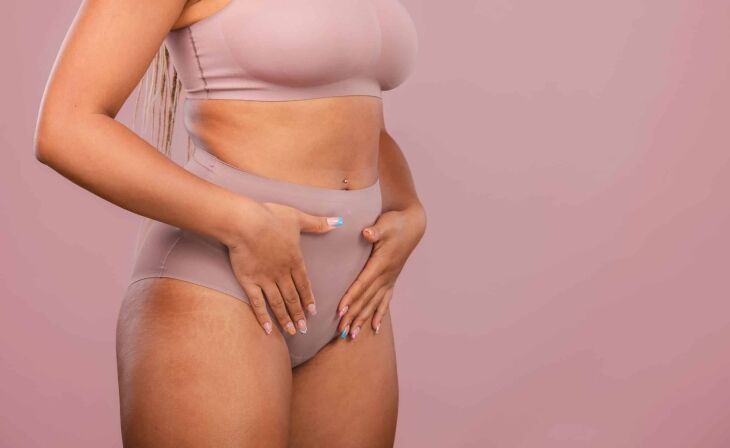
- Hormonally driven fat accumulation — PCOS disrupts insulin sensitivity and shifts how your body stores fat, pushing it toward the abdomen, flanks, and thighs. This fat resists diet and exercise in a way that can feel genuinely demoralizing.
These two symptoms usually show up together. And yet — most clinics treat them in isolation, or don’t address the fat piece at all. That’s a gap we think is worth closing.
Why Laser Hair Removal for PCOS Is Different From the Standard Protocol
If you’ve ever seen “6–8 sessions” quoted for laser hair removal and hit session eight wondering why it’s not done yet — that number wasn’t written with PCOS in mind. Standard protocols assume a treated follicle stays treated. With PCOS, elevated androgens keep recruiting new ones in the background. It’s not that the laser failed. The hormonal environment just keeps generating new work.
More Sessions, Yes — But the Payoff Is Real
Women with PCOS typically need 8–12 sessions to get the kind of results that stick, compared to the 6–8 sessions that work for non-hormonal hair. That’s a meaningful difference — both in time and investment — and you deserve to know that upfront rather than finding out after session five.
The data from laser hair removal for PCOS patients is genuinely encouraging:
- A 50–79% reduction in hair growth at six months post-treatment — going from shaving every morning to barely thinking about it
- 95% patient satisfaction among PCOS patients who complete the full series
- Long-term permanent reduction — especially when paired with hormonal management
The Hormonal Management Connection
The laser disables follicles — but it can’t change your hormone levels. Best outcomes consistently involve patients also working with their OB-GYN or endocrinologist on androgen management. This isn’t either/or. It’s a partnership, and the combination is more effective than either approach alone.
Wondering how many sessions you’d actually need? Come in for a free consultation — we’ll assess your hair type, skin tone, and PCOS history and give you a real number, not a guess. Check our current laser hair removal promotions before you book, too.
Where Does PCOS Hair Actually Show Up? (And Where Can We Treat It?)
PCOS-related hirsutism follows a pretty recognizable pattern — androgen-sensitive areas that respond to those elevated hormone levels. For our patients, that most often means:
- Face: upper lip, chin, sideburns, jaw, and neck — often the first places women notice changes, and frequently the most emotionally distressing
- Body: chest, abdomen (including the “happy trail”), lower back, and buttocks
- Bikini and inner thighs: dense, coarse growth that makes standard hair removal routines feel like a part-time job
- Arms and underarms: noticeably heavier than what might be typical based on family background
Our laser hair removal services cover all of these areas, and we regularly build packages that combine multiple treatment zones in one visit — because driving in for one area at a time gets old fast.
If you want a full overview of how laser hair removal works across all skin tones, what aftercare looks like, and what to expect session by session, our complete laser hair removal guide is a good place to start.
The PCOS–Fat Connection — And Why CoolSculpting Approaches It Differently
If you’ve been eating well, exercising consistently, and still can’t budge the fat around your belly or flanks — that’s not a discipline problem. That’s your hormones. PCOS-related insulin resistance, combined with elevated androgens, actively steers fat toward the midsection and thighs in a way that a caloric deficit often can’t overcome.
That’s where PCOS body contouring with CoolSculpting Elite comes in.
What CoolSculpting Actually Does
CoolSculpting Elite uses controlled cooling (cryolipolysis) to freeze and permanently destroy fat cells in a targeted area. Your body flushes those cells naturally over the following weeks. Clinical data suggests it may eliminate up to 25% of fat cells per treated area per session — and those cells don’t come back. The hormonal environment that made them so stubborn can’t refill cells that no longer exist.
What It Is (and Isn’t)
CoolSculpting is a contouring tool, not a weight-loss treatment. It works best for people close to their goal weight who have specific, localized pockets that won’t respond to lifestyle efforts. If you’re earlier in your PCOS journey, we’ll have that honest conversation about timing during your consultation.
Take a look at our body contouring services for more detail on what CoolSculpting Elite can target and what a typical session involves.
What a Holistic PCOS Medspa Plan at Esthetica Actually Looks Like
Most medspas will treat your chin hair. Some will offer CoolSculpting. Very few will connect both — because both come from the same hormonal source. That’s the gap we’re built to close.
A Sample Combined Plan (Yours Will Be Tailored)
Every plan starts with a consultation. That said, here’s a realistic sense of what a combined PCOS approach at Esthetica often includes:
- Laser hair removal: 8–12 sessions, spaced 6–8 weeks apart, targeting your priority areas — face, bikini, abdomen, wherever you need it most
- CoolSculpting Elite: 1–3 sessions per target zone (abdomen, flanks, inner thighs), spaced 4–6 weeks apart — full results usually visible within 8–12 weeks of each session
- Maintenance: After your initial laser series, some patients benefit from periodic touch-up sessions as hormonal fluctuations can activate new follicles over time
- Medical coordination: We work alongside your OB-GYN or endocrinologist, not instead of them — hormonal management and medspa treatments together consistently produce better outcomes than either alone
Esthetica Medspa has seven locations — Bellevue KY, Newark DE, Lakeland FL, King of Prussia PA, Tampa FL, Louisville KY, and San Antonio TX. Experienced PCOS medspa care is closer than you might think.
Is Any of This Safe If You Have PCOS? (Yes — With a Few Things to Know)
Both treatments have strong safety profiles and are routinely used in patients with PCOS. A few things worth knowing before you start:
- Skin tone: Modern laser platforms work across a wide range of skin tones — your provider will dial in the right wavelength for your specific skin and hair type.
- Pregnancy: Neither treatment is performed during pregnancy. Bring this up in your consultation so we can plan timing accordingly.
- PCOS medications: Metformin and spironolactone don’t contraindicate laser treatment, but always share your full medication list — some drugs do affect candidacy.
- Timelines are longer: PCOS patients need more sessions and more time. That’s not a red flag — it’s just the honest reality of treating a hormonally driven condition.
Before anything begins, we review your full health history. Nothing starts until we’re confident the approach is right for you.
You Don’t Have to Just Live With This: PCOS Laser Hair Removal Is Worth It
PCOS is a condition you manage. “Manage” doesn’t mean accept every symptom as permanent.
PCOS laser hair removal done right may get you to a place where unwanted hair simply isn’t part of your morning anymore. Add targeted body contouring for the fat that’s resisted everything else you’ve tried, and you’ve got a plan that addresses your body the way it actually works. The numbers back it up: 8–12 laser sessions may deliver 50–79% long-term hair reduction, and CoolSculpting may eliminate up to 25% of fat cells per treated zone. When both are part of a coordinated plan — one that keeps your medical team in the loop — the impact goes well beyond aesthetics.
That’s what we’re here for.
Ready to take the first step? Book your free consultation at any of our seven locations. We’ll look at your specific situation, answer every question honestly, and build a plan around your goals — not a template.
Your Questions About PCOS and Laser Hair Removal, Answered
Does laser hair removal work for PCOS?
Yes — and the data is genuinely encouraging. Studies suggest patients may see a 50–79% reduction in hair growth after completing 8–12 sessions, with up to 95% of PCOS patients reporting satisfaction with their results. Best outcomes occur when laser is combined with hormonal management under a physician’s care.
How many laser hair removal sessions do I need if I have PCOS?
Typically 8–12 sessions — more than the 6–8 standard for non-hormonal hair. Elevated androgens keep recruiting new follicles between sessions, which is why completing the full series matters. Your provider will give you a personalized estimate based on hair type, skin tone, and how well your PCOS is currently managed.
Is laser hair removal permanent for PCOS patients?
The correct term is “permanent hair reduction” — not guaranteed elimination. PCOS can continue activating new follicles over time, so some patients benefit from periodic maintenance after their initial series. That said, most patients go from shaving every morning to barely thinking about it. Working with a physician to manage hormones alongside laser tends to produce the most lasting results.
What body areas can be treated with laser hair removal for PCOS?
Virtually any area where PCOS-related hirsutism appears — and for most patients, that includes the face (upper lip, chin, sideburns), neck, chest, abdomen, lower back, bikini area, inner thighs, and arms. We often build multi-area packages so patients can address everything in fewer visits rather than coming in one zone at a time.
Can CoolSculpting help with PCOS-related belly fat?
It may — and it works through a different mechanism than diet or exercise. CoolSculpting Elite uses controlled cooling to permanently destroy fat cells in targeted areas, with clinical data suggesting up to 25% of fat cells per treated zone may be eliminated per session. Because PCOS-related fat is often hormonally resistant, removing those cells directly (rather than just shrinking them) can be more effective than lifestyle changes alone. That said, CoolSculpting is a contouring tool — it works best for patients near their goal weight who have localized pockets of stubborn fat. A consultation will help determine if you’re a good candidate.
Should I see a doctor before getting laser hair removal for PCOS?
Strongly recommended — not as a prerequisite, but because it genuinely improves results. Medications like oral contraceptives or spironolactone may reduce the androgen activity that keeps stimulating new follicles, giving the laser less to re-treat. Your OB-GYN and medspa team can work in parallel, and that combination consistently produces better long-term outcomes than laser alone.
How long does it take to see results from PCOS laser hair removal?
Most patients notice thinner regrowth and slower growth cycles after the second or third session. The full picture takes longer — sessions are spaced 6–8 weeks apart, so a full PCOS series plays out over 6–12 months from start to finish. Patients who complete the full recommended series consistently report results that change their daily routine in a meaningful way.
Does Esthetica Medspa specialize in PCOS treatments?
Yes. We offer a dedicated PCOS laser hair removal program built specifically around the needs of patients with hormonal hair conditions — including adjusted session counts, appropriate pacing, and the option to combine with body contouring for patients dealing with both hirsutism and PCOS-related fat. We see patients at seven locations across Kentucky, Delaware, Florida, Pennsylvania, and Texas.

